Showing posts with label Cucujiformia. Show all posts

Laius

Laius sp., copyright Budak.


Belongs within: Melyridae.

Laius is a genus of relatively small, often reddish soft-bodied beetles.

Characters (from Lea 1909): Comparatively small; usually reddish with metallic-blue, purple or green markings. Antennae short, fairly stout, apparently ten-segmented (true second segment hidden by first), apparent second segment (true third segment) often enormously inflated in male, first segment also more or less inflated. Male with front femora sometimes deeply grooved, front tarsi of peculiar shape and black-tipped.

<==Laius L09
    |--L. alleni Lea 1909 L09
    |--L. armicollis Lea 1909 L09
    |--L. asperipennis Fairm. 1877 L09
    |--L. bellulus L09
    |--L. carus Lea 1898 L09
    |--L. cavicornis Lea 1909 L09
    |--L. cinctus L09 [=Apalochrus cinctus L09; incl. L. femoralis Blackb. 1891 L09, L. mastersi Macleay 1872 L09, M86]
    |--L. conicicornis Blackb. 1886 L09
    |--L. cyanocephalus Lea 1898 L09
    |--L. distortus Blackb. 1886 L09
    |--L. egenus Lea 1898 L09
    |--L. eremita Blackb. 1895 L09
    |--L. eyrensis Blackb. 1891 L09
    |--L. fastidiosus Fairm. 1877 L09
    |--L. flavopictus Lea 1909 L09
    |--L. guttulatus Fairm. 1877 L09
    |--L. insignicornis Fairm. 1877 L09
    |--L. intermedius Lea 1898 L09
    |--L. major Blackb. 1888 L09
    |--L. nidicola Lea 1898 L09
    |--L. nodicornis Blackb. 1886 L09
    |--L. oblongosignatus Fairm. 1877 L09
    |--L. orcicornis Lea 1898 L09
    |--L. orthodoxus Lea 1909 L09
    |--L. pallidus Lea 1898 L09
    |--L. plagiaticollis Fairm. 1877 L09
    |--L. planiceps Lea 1898 L09
    |--L. pretiosus Blackb. 1891 L09
    |--L. quinquenotatus Fairm. 1877 L09
    |--L. quinqueplagiatus Fairm. 1877 L09
    |--L. rufovirens Fairm. 1877 L09
    |--L. rugiceps Lea 1898 L09
    |--L. rugulipennis Fairm. 1877 L09
    |--L. sculptus Lea 1909 L09
    |--L. sinus Lea 1898 L09
    |--L. tarsalis Lea 1909 L09
    |--L. trisignatus L09
    |--L. variegatus Blackb. 1888 L09
    |--L. venustus Erichs. 1840 G89
    |--L. verticalis (Macleay 1827) [=Malachius verticalis] L09
    |--L. ‘verticalis’ Fairmaire 1877 (n. d.) non Malachius verticalis Macleay 1827 L09
    `--L. villosus Lea 1898 L09

*Type species of generic name indicated

REFERENCES

[G89] Gestro, R. 1889. Viaggio ab Assab nel Mar Rosso dei signori G. Doria ed O. Beccari con il R. Avviso «Esploratore» dal 16 Novembre 1879 al 26 Febbraio 1880.—IV. Coleotteri. Annali del Museo Civico di Storia Naturale di Genova, Serie 2a, 7: 5–72.

[L09] Lea, A. M. 1909. Revision of the Australian and Tasmanian Malacodermidae. Trans. Ent. Soc. Lond. 1909 (1): 45–251, pls 2–6.

[M86] Masters, G. 1886. Catalogue of the described Coleoptera of Australia. Part IV. Proceedings of the Linnean Society of New South Wales, series 2, 1 (2): 259–380.
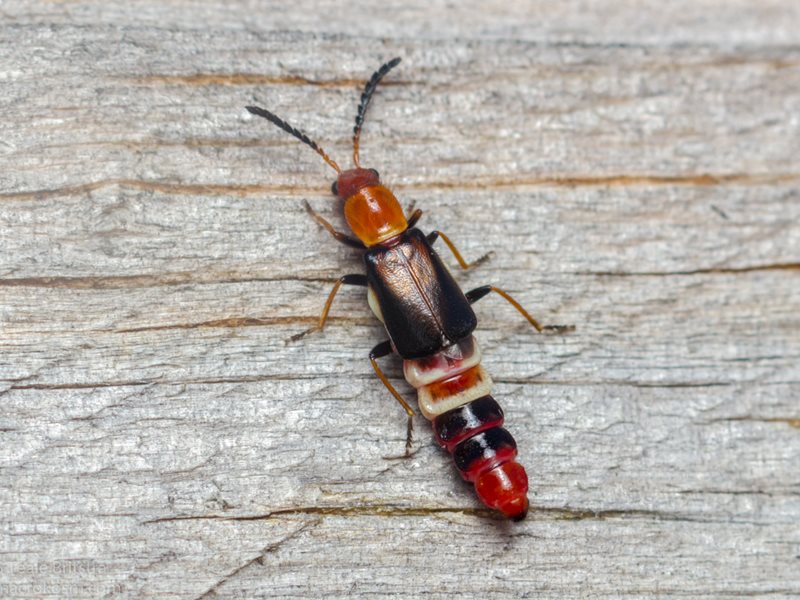
Carphurus

Carphurus sp., copyright Teale Britstra.


Belongs within: Melyridae.

Carphurus is a genus of soft-bodied beetles with shortened elytra.

Characters (from Lea 1909): Antenna not flabellate, head usually more or less convex in male. Elytra not covering abdomen. Body with exsertile vesicles.

<==Carphurus L09
    |--C. alterniventris Fairm. 1879 L09
    |--C. angustatus Lea 1895 L09
    |--C. apicalis Macleay 1872 M86
    |--C. apiciventris Lea 1895 [incl. C. apiciventris var. dubius Lea 1895] L09
    |--C. armipennis Fairm. 1879 L09
    |--C. atricapillis Lea 1909 L09
    |--C. atronitens Fairm. 1879 L09
    |--C. azureipennis Macleay 1872 M86
    |--C. basipennis Fairm. 1879 L09
    |--C. basiventris Lea 1895 L09
    |--C. bifoveatus Lea 1895 L09
    |--C. blackburni Lea 1895 L09
    |--C. cervicalis Germar 1848 L09
    |--C. cristatifrons Fairm. 1877 L09
    |--C. cyaneipennis Macleay 1872 M86 (see below for synonymy)
    |--C. cyanopterus (Bohem. 1858) [=Helcogaster cyanopterus] L09
    |--C. diopthalmus Fairm. 1877 L09
    |--C. elegans Lea 1909 L09
    |--C. elongatus Macleay 1872 M86
    |--C. facialis Fairm. 1877 L09
    |--C. fasciculatus Lea 1909 L09
    |--C. fasciipennis Fairm. 1879 L09
    |--C. fossor Lea 1909 L09
    |--C. frenchi Lea 1909 L09
    |--C. invenustus Lea 1895 L09
    |--C. laesifrons Fairm. 1879 L09
    |--C. latipennis Lea 1895 L09
    |--C. lepidus Lea 1895 L09
    |--C. longicollis Lea 1895 L09
    |--C. longipes Lea 1909 L09
    |--C. longus Lea 1909 L09
    |--C. maculiventris Lea 1909 L09
    |--C. marginiventris Fairm. 1879 L09
    |--C. myrmecophilus L19
    |--C. nubipennis Fairm. 1879 L09
    |--C. pallidifrons Lea 1909 L09
    |--C. pallidipennis Macleay 1872 M86
    |--C. philonthoides Fairm. 1879 L09
    |--C. pictipes Lea 1895 L09
    |--C. pravus Lea 1909 L09
    |--C. punctatus Lea 1909 L09
    |--C. rhagonychinus Fiarm. 1879 L09
    |--C. rhytideres Lea 1895 L09
    |--C. segmentarius Fairm. 1877 L09
    |--C. simulator Lea 1909 L09
    |--C. strigicollis Lea 1909 L09
    |--C. tachyporoides Fairm. 1877 L09
    |--C. telephoroides Fairm. 1879 L09
    |--C. triimpressus Lea 1909 L09
    |--C. uncinatus Lea 1909 L09
    |--C. variipennis Lea 1909 L09
    |--C. vigilans Lea 1909 L09
    `--C. xanthochrous Fairm. 1887 L09

Carphurus cyaneipennis Macleay 1872 M86 [incl. C. cyaneipennis var. aeneipennis Fairm. 1877 L09, C. testaceipes Lea 1895 L09]

*Type species of generic name indicated

REFERENCES

[L09] Lea, A. M. 1909. Revision of the Australian and Tasmanian Malacodermidae. Trans. Ent. Soc. Lond. 1909 (1): 45–251, pls 2–6.

[L19] Lea, A. M. 1919. Notes on some miscellaneous Coleoptera with descriptions of new species.—Part V. Transactions of the Royal Society of South Australia 43: 166–261, pls 25–27.

[M86] Masters, G. 1886. Catalogue of the described Coleoptera of Australia. Part IV. Proceedings of the Linnean Society of New South Wales, series 2, 1 (2): 259–380.

Hypattalus

Hypattalus distortipes, from Insects of Tasmania.


Belongs within: Melyridae.

Hypattalus is a genus of soft-bodied beetles found in Australia.

Characters (from Lea 1909): Antenna eleven-segmented; elytra covering abdomen; body with exsertile vesicles.

<==Hypattalus L09
    |--H. abdominalis (Erich. 1842) (see below for synonymy) L09
    |--H. alphabeticus Lea 1898 L09
    |--H. australis (Fairm. 1877) [=Attalus australis] L09
    |--H. calcaratus Lea 1909 L09
    |--H. carteri Lea 1909 L09
    |--H. collaris Lea 1898 L09
    |--H. dentipes Lea 1909 L09
    |--H. dispar Lea 1898 L09
    |--H. distortipes Lea 1909 L09
    |--H. elegans Blackb. 1894 [incl. H. elegans var. tasmaniensis Lea 1909] L09
    |--H. exilis Lea 1909 L09
    |--H. flaviventris Lea 1909 L09
    |--H. longicornis Lea 1898 L09
    |--H. mirabilis Lea 1898 L09
    |--H. montanus Lea 1909 L09
    |--H. mucronatus Lea 1909 L09
    |--H. pulcherrimus Lea 1898 L09
    |--H. punctulatus Blackb. 1894 L09
    |--H. sordidus Lea 1909 L09
    |--H. violaceus Lea 1898 L09
    `--H. viridis Lea 1898 L09

Hypattalus abdominalis (Erich. 1842) [=Attalus abdominalis; incl. H. brevicornis Lea 1898, H. brevicornis var. occidentalis Lea 1898] L09

*Type species of generic name indicated

REFERENCES

[L09] Lea, A. M. 1909. Revision of the Australian and Tasmanian Malacodermidae. Trans. Ent. Soc. Lond. 1909 (1): 45–251, pls 2–6.

Conophthorus

Lodgepole cone beetle Conophthorus ponderosae, from here.


Belongs within: Pityophthorina.

Conophthorus is a North American genus of bark beetles feeding on seeds in cones of Pinus species (Wood 1986).

Characters (from Wood 1986): Body length 2.2–4.1 mm. Sutures 1 and 2 of antennal club aseptate and clearly marked by grooves and rows of setae; basal margins of pronotum marked by a finely raised line, lateral margins rounded without raised line, pronotal asperities continuing in lateral areas to base.

<==Conophthorus Hopkins 1915 W86
    |--+--C. conicolens CG05
    |  `--C. teocotum CG05
    `--+--+--C. ponderosae [incl. C. contortae, C. flexilis, C. lambertianae, C. monticolae, C. scopulorum] CG05
       |  `--C. radiatae CG05
       `--+--+--+--C. apachecae CG05
          |  |  `--C. michoacanae CG05
          |  `--+--C. edulis [incl. C. cembroides] CG05
          |     `--C. monophyllae CG05
          `--+--C. terminalis CG05
             `--+--C. echinatae CG05
                `--+--*C. coniperda W86, CG05 [=Pityophthorus coniperda W86; incl. C. clunicus CG05, C. taedae CG05]
                   |--C. mexicanus CG05
                   `--C. resinosae [incl. C. banksianae, C. virginianae] CG05

*Type species of generic name indicated

REFERENCES

[CG05] Cognato, A. I., N. E. Gillette, R. C. Bolaños & F. A. H. Sperling. 2005. Mitochondrial phylogeny of pine cone beetles (Scolytinae, Conophthorus) and their affiliation with geographic area and host. Molecular Phylogenetics and Evolution 36: 494-508.

[W86] Wood, S. L. 1986. A reclassification of the genera of Scolytidae (Coleoptera). Great Basin Naturalist Memoirs 10: 1-126.

Scolytodes

Scolytodes schwarzi, from here.


Belongs within: Scolytinae.

Scolytodes is an ecologically diverse group of bark beetles found in the American tropics (Wood 1986).

Characters (from Wood 1986): Antennal funicle six-segmented, club small, sutures present or not; eye oval, entire, finely faceted; pronotal asperities fine, if present; summit at middle or indefinite; basal margins of elytra marked by a fine raised line; elytral vestiture hairlike, usually sparse.

<==Scolytodes Ferrari 1867 (see below for synonymy) W86
    |--*S. laevigatus W86
    |--S. afer [=*Cryphalophilus afer] W86
    |--S. atratus [=*Prionosceles atratus] W86
    |--S. culcitatus [=*Epomadius culcitatus] W86
    |--S. glaber [=*Hexacolus glaber] W86
    |--S. levis [=Hexacolus levis; incl. *Ctenophorus laevigatus non Scolytodes laevigatus] W86
    |--S. minutissimus [=*Hexacolinus minutissimus] W86
    |--S. multistriatus W86
    |--S. plumeriae W86
    |--S. schwarzi [=*Erineophilus schwarzi] W86
    `--S. striatus [=*Hylocurosoma striatum] W86

Scolytodes Ferrari 1867 [incl. Cryphalophilus Schedl 1970, Ctenophorus Chapuis 1869, Epomadius Blandford 1897, Erineophilus Hopkins 1902, Hexacolinus Schedl 1963, Hexacolus Eichhoff 1868, Hylocurosoma Eggers 1940, Prionosceles Blandford 1897] W86

*Type species of generic name indicated

REFERENCES

[W86] Wood, S. L. 1986. A reclassification of the genera of Scolytidae (Coleoptera). Great Basin Naturalist Memoirs 10: 1-126.

Corthylina

Male Corthylus, photographed by WonGun Kim.


Belongs within: Scolytinae.

The Corthylina is a group of xylomycetophagous (feeding on wood-growing fungi) bark beetles (Wood 1986).

Characters (from Wood 1986): Antennal funicle one- to five-segmented, club usually much larger, commonly asymmetrical; prosternal intercoxal piece absent (except obtuse in Gnathotrichus, Gnathotrupes); pubescence usually greatly reduced to obsolete or minute and strongly confused (not in rows); elytral declivity convex to truncate to deeply excavated (weakly bisulcate in some Gnathotrichus), commonly with spinelike processes.

<==Corthylina W86
    |--Gnatharus Wood & Yin 1986 W86
    |    `--*G. tibetensis W86
    |--Glochinocerus Blandford 1904 W86
    |    `--*G. retusipennis W86
    |--Brachyspartus Ferrari 1867 [=Thylurcos Schedl 1939] W86
    |    `--*B. moritzi [=*Thylurcos moritzi] W86
    |--Microcorthylus Ferrari 1867 W86
    |    `--*M. parvulus W86
    |--Corthycyclon Schedl 1951 W86
    |    `--*C. ustum W86
    |--Corthylocurus Wood 1966 W86
    |    `--*C. barbatus [=Brachyspartus barbatus] W86
    |--Metacorthylus Blandford 1904 W86
    |    |--*M. nigripennis W86
    |    `--M. velutinus [=*Paracorthylus velutinus] W86
    |--Amphicranus Erichson 1836 [incl. Piezorhopalus Guerin-Meneville 1838, Steganocranus Eichhoff 1878] W86
    |    |--*A. thoracicus [incl. *Piezorhopalus nitidulus] W86
    |    `--A. dohrni [=*Steganocranus dohrni] W86
    |--Tricolus Blandford 1905 [incl. Pterocyclonoides Schedl 1970] W86
    |    |--*T. ovicollis W86
    |    |--T. octodentatus [=*Pterocyclonoides octodentatus] W86
    |    `--T. peltatus W86
    |--Gnathotrichus Eichhoff 1869 (see below for synonymy) W86
    |    |--G. materiarius (see below for synonymy) W86
    |    |--G. pilosus [=Cryphalus pilosus, *Ancyloderes pilosus] W86
    |    |--G. primus [=*Prognathotrichus primus] W86
    |    `--‘Cryphalus’ sulcatus [=*Gnathotrichoides sulcatus] W86
    |--Gnathotrupes Schedl 1951 (see below for synonymy) W86
    |    |--*G. bolivianus W86
    |    |--G. caliculus [=*Gnathocortus caliculus] W86
    |    |--G. impressus [=*Gnathoglochinus impressus] W86
    |    |--G. nothofagi [=*Gnathomimus nothofagi] W86
    |    `--G. terebratus [=*Gnathotrypanus terebratus] W86
    |--Monarthrum Kirsch 1866 (see below for synonymy) W86
    |    |--*M. chapuisi W86
    |    |--M. cincinnatum [=*Trypocranus cincinnatus] W86
    |    |--M. comatum [=*Eupteroxylon comatum] W86
    |    |--M. cristatum [=*Cosmocorynus cristatus] W86
    |    |--M. fasciatum [=Bostrichus fasciatus, *Corthylomimus fasciatus] W86
    |    |--M. ingens [=*Phthorius ingens] W86
    |    |--M. laterale [=*Pterocyclon laterale] W86
    |    `--M. rufipes [=*Anchonocerus rufipes] W86
    `--Corthylus Erichson 1836 [incl. Morizus Ferrari 1867, Pseudocorthylus Ferrari 1867] W86
         |--*C. compressicornis [=Bostrichus compressicornis] W86
         |--C. cecropii W86
         |--C. concisus W86
         |--C. emarginatus W86
         |--C. excisus [=*Morizus excisus] W86
         |--C. letzneri [=*Pseudocorthylus letzneri] W86
         |--C. panamensis W86
         |--C. procerus W86
         |--C. serratus W86
         `--C. subserratus W86

Gnathotrichus Eichhoff 1869 [incl. Ancyloderes Blackman 1938, Gnathotrichoides Blackman 1931, Paraxyleborus Hoffmann 1942, Prognathotrichus Bright 1972] W86

Gnathotrichus materiarius [=Tomicus materiarius; incl. *G. corthyloides, Xyleborus duprezi, *Paraxyleborus duprezi] W86

Gnathotrupes Schedl 1951 [incl. Gnathocortus Schedl 1975, Gnathoglochinus Schedl 1975, Gnathomimus Schedl 1975, Gnathotrypanus Wood 1968] W86

Monarthrum Kirsch 1866 [incl. Anchonocerus Eichhoff 1878, Corthylomimus Ferrari 1867, Cosmocorynus Ferrari 1867, Eupteroxylon Eggers 1936, Phthorius Eichhoff 1878, Pterocyclon Eichhoff 1869, Trypocranus Eichhoff 1878] W86

*Type species of generic name indicated

REFERENCES

[W86] Wood, S. L. 1986. A reclassification of the genera of Scolytidae (Coleoptera). Great Basin Naturalist Memoirs 10: 1-126.

Ips

European spruce bark beetle Ips typographus, photographed by D. I. Gavryushin.


Belongs within: Scolytinae.

Ips is a genus of bark beetles native to Eurasia, north Africa and North America, with at least one species introduced to Australia. Species of this genus are phloeophagous and heterosanguineously polygynous (Wood 1986).

Characters (from Wood 1986): Body length 2.1–6.9 mm. Antennal club flattened, sutures moderately to strongly bisinuate (occasionally procurved); eye small, finely faceted, sinuate on anterior margin, its width equal to much less than length of scape, its length equal to much less than twice length of scape; elytral declivity broadly, rather deeply excavated, margins acutely elevated and armed by three or more pairs of denticles, third pair on or incorporated into crest of lateral margin, lower margin of declivity rounded.

<==Ips DeGeer 1775 [incl. Cumatotomicus Ferrari 1867, Cyrtotomicus Ferrari 1867] W86
    |--*I. typographus (Linnaeus 1758) [=Dermestes typographus, Tomicus typographus] W86
    |--I. acuminatus [=Bostrichus acuminatus, *Cyrtotomicus acuminatus] W86
    |--I. amitinus JKW03
    |--I. cembrae JKW03
    |--I. concinnus W86
    |--I. grandicollis SC04
    |--I. hunteri W86
    |--I. mexicanus W86
    |--I. orientalis W86
    |--I. perturbatus W86
    |--I. pilifrons W86
    |    |--I. p. pilifrons W86
    |    `--I. p. utahensis W86
    |--I. sexdentatus [=Dermestes sexdentatus; incl. Bostrichus stenographus, *Cumatotomicus stenographus] W86
    `--I. woodi W86

*Type species of generic name indicated

REFERENCES

[JKW03] Jacobs, K., T. Kirisits & M. J. Wingfield. 2003. Taxonomic re-evaluation of three related species of Graphium, based on morphology, ecology and phylogeny. Mycologia 95 (4): 714-727.

[SC04] Stone, C., & N. C. Coops. 2004. Assessment and monitoring of damage from insects in Australian eucalypt forests and commercial plantations. Australian Journal of Entomology 43 (3): 283-292.

[W86] Wood, S. L. 1986. A reclassification of the genera of Scolytidae (Coleoptera). Great Basin Naturalist Memoirs 10: 1-126.

Cyrtogenius

Undescribed species of Cyrtogenius, photographed by Jiri Hulcr.


Belongs within: Scolytinae.

Cyrtogenius is a genus of bark beetles found from Africa to Micronesia; members of this genus are phloeophagous and heterosanguineously polygynous (Wood 1986).

Characters (from Wood 1986): Antennal club with suture 1 weakly to profoundly procurved, rarely with sutures absent and pubescent to base, posterior face with only one suture indicated; funicle of small species with as few as three segments, most four- or five-segmented; pronotum with dorsal profile evenly arched, summit indefinite, anterior half of pronotum declivous and armed by asperities; procoxae narrowly separated, rarely intercoxal piece longitudinally emarginate, commonly with ventrolateral margin of declivity slightly elevated or armed; scutellum rather large, flat. Male of normal size, joining female in new parental gallery.

<==Cyrtogenius Strohmeyer 1910 (see below for synonymy) W86
    |--*C. bicolor W86
    |--C. africanus [=*Metahylastes africanus] W86
    |--C. aries [=*Artepityophthorus aries] W86
    |--C. grandis [=Pelicerus grandis, *Ozodendron grande] W86
    |--C. kumatoensis [=*Orosiotes kumatoensis] W86
    |--C. movoliae [=*Mimidendrulus movoliae] W86
    |--C. nitidus [=Lepicerus nitidus, *Pelicerus nitidus] W86
    |--C. pini [=*Carposinus pini] W86
    |--C. rugipennis [=*Carpophloeus rugipennis] W86
    `--C. vaticae [=*Taphroborus vaticae] W86

Nomen nudum: *Taphrostenoxis tenuis Schedl in Wood 1986 W86

Cyrtogenius Strohmeyer 1910 [=Kyrtogenius; incl. Artepityophthorus Schedl 1969, Carpophloeus Schedl 1959, Carposinus Hopkins 1915, Eulepiops Schedl 1939, Metahylastes Eggers 1922, Mimidendrulus Schedl 1957, Orosiotes Niisima 1917, Ozodendron Schedl 1957, Pelicerus Eggers 1923, Taphroborus Nunberg 1961, Taphrostenoxis Schedl in Wood 1986 (n. n.)] W86

*Type species of generic name indicated

REFERENCES

[W86] Wood, S. L. 1986. A reclassification of the genera of Scolytidae (Coleoptera). Great Basin Naturalist Memoirs 10: 1-126.

Xyleborus

European shot borer Xyleborus dispar in plum tree, from here.


Belongs within: Scolytinae.

Xyleborus is a cosmopolitan genus of xylomycetophagous (i.e. feeding on fungi growing on wood) bark beetles. Members of this genus are consanguineously polygynous, with haploid flightless males (Wood 1986).

Characters (from Wood 1986): Females with body length 1.7 to 5.9 mm, mostly more than 2.0 times as long as wide; segment I of antennal club corneous, its distal margin very acutely elevated into a continuous costa (forming a complete circle) extending from anterior face to apex; basal segment of labial palpus enlarged, conspicuously wider than segment 2 or 3; lateral margins of pronotum rounded; scutellum visible, moderately large, its surface flush with adjacent surface of elytra; procoxae contiguous, intercoxal piece longitudinally emarginate (a few individuals in javanus group subcontiguous but only feebly emarginate), its posterior element inflated, occasionally dentate; protibia with posterior face almost flat, smooth.

<==Xyleborus Eichhoff 1864 (see below for synonymy) W86
    |--*X. monographus [=Bostrichus monographus] W86
    |--X. bidentatus [=Phloeotrogus bidentatus; incl. *Boroxylon stephegynis] W86
    |--X. cryptographus [=Bostrichus cryptographus; *Heteroborips cryptographus] W86
    |--X. dispar [=X. (Apate) dispar, *Anisandrus dispar] W86
    |--X. kalshoveni [=*Notoxyleborus kalshoveni] W86
    |--X. meuseli [=*Xyleborips meuseli] W86
    |--X. prelaetus [incl. *Cyclorhipidion pelliculosum] W86
    |--X. pubescens W86
    |--X. spathipennis W86
    |--X. subcostatus [incl. *Progenius fleutiauxi] W86
    `--X. volvulus [=Bostrichus volvulus; incl. Xyleborus guanajuatensis, *Anaeretus guanajuatensis] W86

Xyleborus Eichhoff 1864 [incl. Anaeretus Dugès 1887, Anisandrus Ferrari 1867, Boroxylon Hopkins 1915, Cyclorhipidion Hagedorn 1912, Heteroborips Reitter 1913, Notoxyleborus Schedl 1934, Progenius Blandford 1896, Xyleborips Reitter 1913] W86

*Type species of generic name indicated

REFERENCES

[W86] Wood, S. L. 1986. A reclassification of the genera of Scolytidae (Coleoptera). Great Basin Naturalist Memoirs 10: 1-126.

Hylurgops

Hylurgops rugipennis pinifex, photographed by Tom Murray.


Belongs within: Hylesininae.

Hylurgops is a Holarctic genus of monogamous bark beetles breeding in phloem tissues of Pinaceae (Wood 1986).

Characters (from Wood 1986): Pronotum usually constricted anteriorly, usually about equal numbers of small and large punctures intermixed on disc; striae 10 obsolete behind level of posterior coxae, only striae 9 continuing caudad; third tarsal segments broad, bilobed.

<==Hylurgops LeConte 1876 (see below for synonymy) W86
    |--H. rugipennis W86
    |    |--H. r. rugipennis W86
    |    `--*H. r. pinifex [=Hylastes pinifex] W86
    |--H. dubius [=*Myelophilites dubius] W86
    |--H. electrinus [=*Hylesinites electrinus] W86
    |--H. glabratus JKW03
    |--*Hylescierites’ granulatus Schedl 1947 W86
    |--H. palliatus JKW03
    |--H. planirostris Wood & Bright 1992 D09
    `--H. schellwieni [=*Hylastites schellwieni] W86

Hylurgops LeConte 1876 [incl. Hylastites Hagedorn 1907, Hylescierites Schedl 1947, Hylesinites Germar 1813, Myelophilites Hagedorn 1907] W86

*Type species of generic name indicated

REFERENCES

[D09] Davis, S. R. 2009. Morphology of Baridinae and related groups (Coleoptera, Curculionidae). ZooKeys 10: 1-136.

[JKW03] Jacobs, K., T. Kirisits & M. J. Wingfield. 2003. Taxonomic re-evaluation of three related species of Graphium, based on morphology, ecology and phylogeny. Mycologia 95 (4): 714-727.

[W86] Wood, S. L. 1986. A reclassification of the genera of Scolytidae (Coleoptera). Great Basin Naturalist Memoirs 10: 1-126.

Phloeotribus

Phloeotribus scarabaeoides, photographed by P. Falatico.


Belongs within: Hylesininae.

Phloeotribus is a genus of monogamous, phloeophagous bark beetles found in the Holarctic, South America and Australia (Wood 1986).

Characters (from Wood 1986): Frons sexually dimorphic, male variously impressed, female flat to convex; eye entire; funicle five-segmented, club almost non-existent to strongly asymmetrical, deeply divided into three movable sublammelate segmentes, ventral or lateral margin of each antennal club segment often weakly to profoundly extended into a sublamellate process; lateral margins of pronotum rounded; procoxae contiguous; lateral margin of protibia with several socketed teeth, none strongly projecting beyond others (one exception); metatergum fused to its postnotum.

<==Phloeotribus Latreille 1796 (see below for synonymy) W86
    |--P. scarabaeoides [=Scolytus scarabaeoides; incl. Hylesinus oleae, *Phloeotribus oleae] W86
    |--P. brevicollis [=Bostrichus brevicollis; incl. *Comesiella sicula] W86
    |--P. caucasicus W86
    |--P. championi [=*Eulytocerus championi] W86
    |--P. crenatus [=*Elzearius crenatus] W86
    |--P. nubilus [=*Neophloeotribus nubilus] W86
    |--P. perfoliatus [=*Phloeophthorus perfoliatus] W86
    |--P. pilula W86
    |--P. puberulus [=*Dryotomus puberulus, *Dryotomicus puberulus] W86
    |--P. rhododactylus W86
    |--P. setulosus W86
    `--P. spinulosus [=Phloeophthorus spinulosus, *Phthorophloeus spinulosus] W86

Phloeotribus Latreille 1796 [=Phloiotribus; incl. Comesiella Del Guercio 1925, Dryotomicus Wood 1962, Dryotomus Chapuis 1869, Elzearius Guillebeau 1893, Eulytocerus Blandford 1897, Neophloeotribus Eggers 1943, Phloeophthorus Wollaston 1854, Phthorophloeus Rey 1883] W86

*Type species of generic name indicated

REFERENCES

[W86] Wood, S. L. 1986. A reclassification of the genera of Scolytidae (Coleoptera). Great Basin Naturalist Memoirs 10: 1-126.

Scolytogenes

Scolytogenes jalapae, photographed by J. E. Mercado.


Belongs within: Scolytinae.

Scolytogenes is a genus of monogamous bark beetles that mostly bore in the stems of lianas (Wood 1986).

Characters (from Wood 1986): Male subequal in size to female, capable of flight. Antennal funicle four-segmented, club with sutures strongly to profoundly procurved, 1 marked on mesal half by a septum, remaining sutures marked by setae or obsolete (septum complete in several small New Guinea species); both basal and lateral margins of pronotum marked by a fine raised line, groove forming lateral line on pronotum rather weakly defined; posterior face of metatibia with a groove for reception of tarsus on lateral half; venter of abdomen weakly to very strongly ascending to meet apex of elytra, apex of elytra usually ascending also.

<==Scolytogenes Eichhoff 1878 (see below for synonymy) W86
    |--*S. darwini W86
    |--S. aspericollis [=*Lepicerus aspericollis, *Lepicerinus aspericollis] W86
    |--S. ater [=*Negritus ater] W86
    |--S. communis [=*Cryphalomorphus communis] W86
    |--S. jalapae [=Bostrichus jalapae, *Letznerella jalapae] W86
    |--S. knabi [=Ernoporides knabi, Cryphalomorphus knabi; incl. *E. floridensis] W86
    |--S. papuanus [=*Xylocryptus papuanus] W86
    |--S. parvus [=*Hypothenoides parvus] W86
    |--S. squamulosus [=*Cylindrotomicus squamulosus] W86
    `--S. usagaricus [=*Neocryphalus usagaricus] W86

Scolytogenes Eichhoff 1878 [incl. Cryphalomorphus Schaufuss 1890, Cylindrotomicus Eggers 1936, Ernoporides Hopkins 1915, Hypothenoides Hopkins 1915, Lepicerinus Hinton 1936, Lepicerus Eichhoff 1878, Letznerella Reitter 1913, Negritus Eggers 1923, Neocryphalus Eggers 1922, Xylocryptus Schedl 1975] W86

*Type species of generic name indicated

REFERENCES

[W86] Wood, S. L. 1986. A reclassification of the genera of Scolytidae (Coleoptera). Great Basin Naturalist Memoirs 10: 1-126.

Ambates

Ambates leopardinus, from the Smithsonian Institution.


Belongs within: Baridinae.

Ambates is a genus of weevils found in the Amazon region.

Characters (from Casey 1922): Beak arcuate, cylindric, antennae inserted at about middle of beak; anterior coxae contiguous; tibiae pluricostulate; claws arcuate, free; elytra not laterally carinulate, ornamentation circumambient.

<==Ambates
    |--A. benoisti Hustache 1949 H49
    |--A. bisignatus H49
    |--A. boliviensis Hustache 1949 H49
    |--A. chaetopus Champion 1909 D09
    |--A. claveri Hustache 1949 H49
    |--A. delicatulus Hustache 1949 H49
    |--A. foveifrons Hustache 1949 H49
    |--A. obliquatus Hustache 1949 H49
    |--A. obliquevittatus Hustache 1949 H49
    |--A. rufulus Hustache 1949 H49
    |--A. rugosus H49
    `--A. sulphureus Hustache 1949 H49

*Type species of generic name indicated

REFERENCES

Casey, T. L. 1922. Memoirs on the Coleoptera vol. 10. Studies in the rhynchophorous subfamily Barinae of the Brazilian fauna. New Era Printing Company: Lancaster (PA).

[D09] Davis, S. R. 2009. Morphology of Baridinae and related groups (Coleoptera, Curculionidae). ZooKeys 10: 1-136.

[H49] Hustache, A. 1949. Nouveaux Barinae Sud Américains. Première partie—Ambatini, Peridinetini, Pantotelini, Cyrionichyna et Optanini. Boletim do Museu Nacional, nova serie, Zoologia 95: 1-55.

Torcina

Probable specimen of Sibariops, photographed by Mike Quinn.

Belongs within: Baridinae.

The Torcina is a group of weevils with a parallel-sided and relatively slender body.

<==Torcina D09
    |--Microtorcus tubulatus Casey 1922 D09
    |--Sibariopsida docilis Casey 1922 D09
    |--Anatorcus D09
    |    |--A. argenteus Hustache 1949 H49
    |    `--A. densus Casey 1922 D09
    |--Torcobius Casey 1922 D09
    |    |--T. inflatirostris Hustache 1949 H49
    |    `--T. subfasciatus Hustache 1949 H49
    |--Pseudotorcus D09
    |    |--P. cylindricus Hustache 1949 H49
    |    |--P. glabriceps Hustache 1949 H49
    |    |--P. longirostris Hustache 1949 H49
    |    `--P. rufipes Hustache 1949 D09
    |--Torcus D09
    |    |--T. cinereus Hustache 1949 H49
    |    |--T. nigricornis H49
    |    |--T. nigrinus Hustache 1939 D09
    |    |--‘Sibariops’ pilipennis H49
    |    `--T. variabilis Hustache 1939 D09
    `--Sibariops D09
         |--S. boliviensis H49
         |--S. brevipilis Hustache 1949 H49
         |--S. castanea Hustache 1949 H49
         |--S. concinnus (LeConte 1876) D09
         |--S. concurrens (Casey 1892) D09
         |--S. praedalta Hustache 1949 H49
         `--S. pusilla Hustache 1949 H49

*Type species of generic name indicated

REFERENCES

[D09] Davis, S. R. 2009. Morphology of Baridinae and related groups (Coleoptera, Curculionidae). ZooKeys 10: 1-136.

[H49] Hustache, A. 1949. Nouveaux Barinae Sud Américains. Troisième partie – Centrinina. Boletim do Museu Nacional, nova serie, Zoologia 97: 1-143.

Lydamis

Lydamis centralis, from the Smithsonian Institution Department of Entomology.


Belongs within: Baridinae.

Lydamis is a genus of weevils found in Central and South America, characterised by the possession of relatively long and slender tarsal claws (Casey 1922).

Characters (from Casey 1922): Body rhomboidal, generally densely clothed with variegated scales; beak evenly arcuate, cylindric and strongly sculptured; antennae medial, first two segments of funicle rather elongate, subequal, two to four also more or less elongate and decreasing gradually, the outer three short, club elongate-oval, gradually pointed and with its first segment much less than half the mass. Scutellum well-developed, transverse, flat, densely clothed, with its hind margin somewhat sharply angulate.

<==Lydamis
    |--L. bifasciata Hustache 1949 H49
    |--L. cinnamomeus Champion 1907 D09
    |--L. conicicollis Hustache 1949 H49
    |--L. funebris Hustache 1949 H49
    |--L. nitida Hustache 1949 H49
    |--L. obscura Hustache 1949 [incl. L. obscura var. unicolor Hustache 1949] H49
    |--L. pumila Hustache 1949 H49
    |--L. subaurata Hustache 1949 [=L. punctella ms] H49
    |--L. venezuelana Hustache 1949 H49
    `--L. vicina Hustache 1949 H49

*Type species of generic name indicated

REFERENCES

Casey, T. L. 1922. Memoirs on the Coleoptera vol. 10. Studies in the rhynchophorous subfamily Barinae of the Brazilian fauna. New Era Printing Company: Lancaster (PA).

[D09] Davis, S. R. 2009. Morphology of Baridinae and related groups (Coleoptera, Curculionidae). ZooKeys 10: 1-136.

[H49] Hustache, A. 1949. Nouveaux Barinae Sud Américains. Première partie—Ambatini, Peridinetini, Pantotelini, Cyrionichyna et Optanini. Boletim do Museu Nacional, nova serie, Zoologia 95: 1-55.

Baridinae

Peridinetus irroratus, photographed by Steven Paton.


Belongs within: Curculionidae.
Contains: Ambates, Madopterina, Torcina, Zygobaridina, Tonesiina, Madarina, Leptoschoinina, Lydamis, Coelonertina, Diorymerina, Eurhinina, Linoma, Pseudobaris, Heterosternus, Baris.

The Baridinae are a large group of weevils placed in about 550 genera. They are characterised by a generally rounded body form, with all anterior, posterior, dorsal, and ventral margins usually smooth and contiguous, and by an ascended mesepimeron (Davis 2009). Beyond these features, however, the morphological diversity within the group is notably high, and the baridines are consequently divided between a number of tribes and subtribes.

<==Baridinae [Barididae, Barinae]
    |  i. s.: Moreobaris deplanata (Roelofs 1875) D09
    |--Ambatini D09
    |    |--Ambates D09
    |    `--Pteracanthus smidtii Dejean 1835 D09
    |--Madopterini [Centrinini] D09
    |    |--Madopterina D09
    |    |--Torcina D09
    |    |--Zygobaridina D09
    |    `--Thaliabaris [Thaliabaridina] D09
    |         `--T. inermis Marshall 1952 D09
    |--Anopsilus [Anopsilini] D09
    |    |--A. aequatorialis Hustache 1951 H51a
    |    |--A. bicolor Hustache 1951 H51a
    |    |--A. conicollis H51a
    |    |--A. minutus Hustache 1951 H51a
    |    |--A. oblongus Boheman 1844 D09
    |    |--A. parvulus Hustache 1951 H51a
    |    |--A. pusillus Hustache 1951 H51a
    |    |--A. rufitarsis Hustache 1951 H51a
    |    `--A. striatipennis Hustache 1951 H51a
    |--Pantotelini D09
    |    |--Pantoteles [Pantotelina] D09
    |    |    |--P. subrectirostris Hustache 1949 H49
    |    |    `--P. tenuirostris Boheman 1845 D09
    |    `--Cyrionyx [Cyrionychina] D09
    |         |  i. s.: C. alboscutellatus Hustache 1949 H49
    |         |         C. bruchi Hustache 1949 H49
    |         |         C. camelus Champion 1907 D09
    |         |         C. cinereus Hustache 1949 H49
    |         |         C. nitidulus Hustache 1949 H49
    |         |         C. rufipes Hustache 1949 H49
    |         `--C. (Anones) H49
    |              |--C. (A.) episternalis Hustache 1949 H49
    |              `--C. (A.) fulvomaculatus Hustache 1949 [=C. (Anonea [l. c.]) fulvomaculatus] H49
    |--Madarini D09
    |    |--Tonesiina D09
    |    |--Madarina D09
    |    |--Leptoschoinina D09
    |    |--Eutoxus Schoenherr 1844 [Eutoxina] D09
    |    |    `--E. laevisculus Hustache 1951 H51b
    |    `--Barymerina [Barymerini] D09
    |         |--Physotroctus H51b
    |         |--Physoproetus H51b
    |         |--Chapatiella Hustache 1951 H51b
    |         |    `--*C. excelsa Hustache 1951 H51b
    |         |--Crassiopus Hustache 1951 H51b
    |         |    `--*C. semicastaneus Hustache 1951 H51b
    |         `--Barymerus binarius Hustache 1938 D09
    |--Nertinini D09
    |    |--Lichnus D09
    |    |    |--L. bruchi Hustache 1951 [=Prolichnus bruchi ms; incl. L. bruchi var. rufipennis Hustache 1951] H51b
    |    |    |--L. longulus Hustache 1938 D09
    |    |    `--L. maculicollis Hustache 1951 H51b
    |    |--Nertinus Mohl. 1943 H51b
    |    |    |--N. denticulatus Hustache 1951 H51b
    |    |    |--N. grallator [=Nertus grallator, N. lineatus Hustache 1951 (n. n.)] H51b
    |    |    |--N. inermis Hustache 1951 [=N. bicolor ms] H51b
    |    |    |--N. longirostris Hustache 1951 H51b
    |    |    |--N. spretus [=Nertus spretus. N. tarsalis Hustache 1951 (n. n.)] H51b
    |    |    `--N. suturalis (Boheman 1844) D09
    |    `--Strongylotes D09
    |         |--S. curvirostris Hustache 1951 H51b
    |         |--S. denudatus Hustache 1951 (see below for synonymy) H51b
    |         |--S. jacobi Hustache 1951 H51b
    |         |--S. lineatulus Hustache 1951 [=Neobaridia lineatula ms] H51b
    |         |--S. quadricollis H51b
    |         `--S. squamans Boheman 1844 D09
    |--Peridinetus [Peridinetini] D09
    |    |--P. albicollis Hustache 1949 [=P. stigma ms] H49
    |    |--P. bondari Hustache 1949 H49
    |    |--P. circumcinctus Hustache 1949 H49
    |    |--P. cretaceus Pascoe 1880 D09
    |    |--P. erythrocephalus Hustache 1949 [=P. rubrocephalus ms] H49
    |    |--P. femoralis Hustache 1949 [incl. P. femoralis var. brasiliensis Hustache 1949] H49
    |    |--P. geniculatus Hustache 1949 H49
    |    |--P. humilis Hustache 1949 H49
    |    |--P. incisicollis Hustache 1949 [=P. peruanus ms] H49
    |    |--P. irroratus Schoenherr 1837 D09
    |    |--P. nigripes Hustache 1949 H49
    |    |--P. pictus H49
    |    |--P. quinquemaculatus Hustache 1949 H49
    |    |--P. rubripes Hustache 1949 [=P. rufipes ms] H49
    |    |--P. rufescens Hustache 1949 H49
    |    |--P. similis Hustache 1949 H49
    |    |--P. songoensis Hustache 1949 H49
    |    |--P. suturalis D09
    |    |--P. variegatus Hustache 1949 H49
    |    `--P. zinckeni H49
    |--Optatini D09
    |    |--Lydamis D09
    |    |--Optatus palmaris Champion 1907 D09
    |    |--Pistus galeatus (Boheman 1844) D09
    |    |--Telemus Pascoe 1889 D09
    |    |    `--T. dispersus Hustache 1949 [=T. griseopunctatus ms] H49
    |    |--Pseudoptatus H49
    |    |    |--P. dentipes H49
    |    |    `--P. morio Hustache 1949 H49
    |    |--Scambanus Schönh. 1844 H49
    |    |    |--*S. setifer H49
    |    |    `--S. setosus Hustache 1949 H49
    |    |--Costovia H49
    |    |    |--C. brunnea Hustache 1949 H49
    |    |    `--C. rubricollis Hustache 1949 H49
    |    |--Pardisomus D09
    |    |    |--P. biplagiatus (Desbrochers 1906) D09
    |    |    |--P. guttatus H49
    |    |    `--P. multiguttatus Hustache 1949 H49
    |    `--Neoscambus H49
    |         |--*N. galeatus (Boh. 1844) [=Scambus galeatus] H49
    |         |--N. dromedarius H49
    |         `--N. niveus Hustache 1949 H49
    `--Baridini D09
         |--Coelonertina D09
         |--Diorymerina D09
         |--Eurhinina D09
         |--Coleomerina D09
         |    |--Harotreus triangularis Hustache 1949 H49
         |    `--Coleomerus D09
         |         |--C. abdominalis Hustache 1949 (see below for synonymy) H49
         |         |--C. boliviensis Hustache 1949 D09
         |         |--C. columbicus Hustache 1949 H49
         |         `--C. subviolaceus Hustache 1949 H49
         `--Baridina [Barina] D09
              |--Genevra dentipes Hustache 1951 H51a
              |--Sindesus ruber Hustache 1951 [=Prosindesus ruber ms] H51a
              |--Givenius H51a
              |--Eugivenius H51a
              |--Anagivenius unidentatus Hustache 1951 [incl. A. unidentatus var. sanguinicollis Hustache 1951] H51a
              |--Linoma H51a
              |--Pseudobaris D09
              |--Heterosternus H51a
              |--Sclerobaris violacea Hustache 1951 H51a
              |--Trogatia H51a
              |--Megops morosus H51a
              |--Baris D09
              |--Acanthobaris H51a
              |--Cosmobaris americana Casey 1920 D09
              |--Craptus tibialis Casey 1922 D09
              |--Cryptosternum nevermanni Heller 1936 D09
              |--Dalcesia Casey 1922 D09
              |--Deipyle induta Champion 1909 D09
              |--Desmoglyptus arizonicus Casey 1920 D09
              |--Elasmobaris signifer Reitter 1895 D09
              |--Lepidobaris acnisti Champion 1909 D09
              |--Macrobaris Champion 1909 D09
              |--Megalobaris viridana (Boheman 1836) D09
              |--Nanobaris Champion 1909 D09
              |--Odontobaris Champion 1909 D09
              |--Orthoris crotchii LeConte 1876 D09
              |--Plesiobaris albilata (LeConte 1876) D09
              |--Pycnobaris pruinosa Casey 1892 D09
              |--Rhoptobaris canescens LeConte 1876 D09
              |--Solenosternus dividuus (Champion 1909) D09
              |--Sphenobaris quadridens Champion 1909 D09
              |--Trepobaris inornata Champion 1909 D09
              |--Trichobaris texana LeConte 1876 D09
              |--Ulobaris loricata Reitter 1895 D09
              |--Opertes Casey 1922 D09
              |    `--O. glaber Hustache 1951 H51a
              |--Mimobaris Hustache 1951 H51a
              |    `--*M. nitens Hustache 1951 H51a
              |--Hasidellus Hustache 1951 H51a
              |    `--*H. robustus Hustache 1951 [=Hasidus robustus] H51a
              |--Claveriella Hustache 1951 H51a
              |    `--*C. violacea Hustache 1951 H51a
              |--Plasiella Hustache 1951 H51a
              |    `--*P. subcylindrica Hustache 1951 H51a
              |--Paranathaniops Hustache 1951 H51a
              |    `--*P. subfasciata Hustache 1951 H51a
              |--Liogivenius Hustache 1951 H51a
              |    `--*L. ebeninus Hustache 1951 H51a
              |--Buprestobaris Hustache 1951 H51a
              |    `--*B. caudata Hustache 1951 H51a
              |--Scleronychius Hustache 1951 H51a
              |    `--*S. ebeninus Hustache 1951 H51a
              |--Allomegops Hustache 1951 D09
              |    `--*A. sulcatirostris Hustache 1951 H51a
              |--Desmobaris Hustache 1951 H51a
              |    `--*D. singularis Hustache 1951 H51a
              |--Trogatiella Hustache 1951 H51a
              |    `--*T. rufipes (Hustache 1924) [=Limnobaris rufipes] H51a
              |¬--Acanthobarisella Hustache 1951 H51a
              |    `--*A. antennata Hustache 1951 H51a
              |--Busckiella D09
              |    |--B. lecythidis (Champion 1909) D09
              |    `--B. scutellata Hustache 1951 H51a
              |--Dissopygus D09
              |    |--D. apicalis Hustache 1951 H51a
              |    `--D. metallescens (Boheman 1836) D09
              |--Rhytidobaris H51a
              |    |--R. seriesetosa Hustache 1951 H51a
              |    `--R. sulcata Hustache 1951 H51a
              |--Archobaris Hustache 1951 H51a
              |    |--*A. undulata Hustache 1951 H51a
              |    `--A. brachypennis Hustache 1951 H51a
              |--Coryssobaris Hustache 1951 H51a
              |    |--*C. sculpturata Hustache 1951 [=Baris lemoulti ms] H51a
              |    `--C. malefida Hustache 1951 [=Baris malefida ms] H51a
              |--Lupulina H51a
              |    |--L. brunnescens Hustache 1951 H51a
              |    `--L. subpubescens Hustache 1951 H51a
              |--Giveniopsis H51a
              |    |--G. nigrescens Hustache 1951 [=G. flavescens ms] H51a
              |    `--G. setosella Hustache 1951 H51a
              |--Anthobaris Hustache 1951 H51a
              |    |--*A. rugosicollis Hustache 1951 H51a
              |    `--A. denticulata Hustache 1951 H51a
              |--Hispibaris Hustache 1951 H51a
              |    |--*H. albosetosa Hustache 1951 H51a
              |    `--H. onguicularis Hustache 1951 H51a
              |--Cymatobaris D09
              |    |--C. amethystina Hustache 1951 H51a
              |    |--C. coerulea H51a
              |    `--C. impressifrons Casey 1922 D09
              |--Cyanobaris H51a
              |    |  i. s.: C. rufiventris H51a
              |    `--C. (Hedybaris Hustache 1951) H51a
              |         `--C. (*H.) elegans Hustache 1951 H51a
              |--Zathanius Casey 1922 D09
              |    |--Z. elongatulus Hustache 1951 H51a
              |    |--Z. lyratus H51a
              |    `--Z. scutellatus Hustache 1951 H51a
              |--Eugymnobaris H51a
              |    |--E. bosqi Hustache 1951 [=Gymnobaris bosqi ms] H51a
              |    |--E. bruchi Hustache 1951 [=Gymnobaris bruchi ms] H51a
              |    `--E. lazulina Hustache 1951 [=Gymnobaris lazulina ms] H51a
              |--Cercobaris H51a
              |    |--C. convexipennis Hustache 1951 H51a
              |    |--C. obtusata Hustache 1951 H51a
              |    `--C. rugosa Hustache 1951 H51a
              |--Oligobaris H51a
              |    |--O. brevipilosus Hustache 1951 H51a
              |    |--O. cavicollis Hustache 1951 H51a
              |    `--O. nitidus Hustache 1951 H51a
              |--Liobaridia H51a
              |    |--L. distinguenda Hustache 1951 H51a
              |    |--L. dubitabilis H51a
              |    |--L. punctatellas Hustache 1951 H51a
              |    `--L. vicina Hustache 1951 H51a
              |--Rhytidoglymma D09
              |    |--R. aenescens Faust 1896 D09
              |    |--R. benoisti Hustache 1951 H51a
              |    |--R. caudata Hustache 1951 H51a
              |    |--R. sponsor Hustache 1951 [=Baris sponsor ms] H51a
              |    `--R. subglabra Hustache 1951 H51a
              |--Mesothanius H51a
              |    |--*M. emarginatus H51a
              |    |--M. canaliculatus Hustache 1951 H51a
              |    |--M. coelosthernoides Hustache 1951 H51a
              |    |--M. sexpunctatus Hustache 1951 [=M. sexpustulatus ms] H51a
              |    `--M. sparsus Hustache 1951 H51a
              |--Methyorrhina H51a
              |    |--M. griseola Hustache 1951 H51a
              |    |--M. guyanea Hustache 1951 H51a
              |    |--M. seriatosetulosa Hustache 1951 H51a
              |    |--M. squamulata Hustache 1951 H51a
              |    `--M. vestita Hustache 1951 H51a
              |--Stereobaris D09
              |    |--S. albosetosa Hustache 1951 [=S. albosquamulata ms] H51a
              |    |--S. impressithorax Hustache 1951 H51a
              |    |--S. interpunctata Casey 1922 D09
              |    |--S. pardoensis Hustache 1951 H51a
              |    |--S. purpurea Hustache 1951 H51a
              |    `--S. revoili Hustache 1951 H51a
              |--Thanius Casey 1922 D09
              |    |--T. columbicus Hustache 1951 H51a
              |    |--T. explanatus Hustache 1951 H51a
              |    |--T. impressirostris Hustache 1951 H51a
              |    |--T. perpolitus H51a
              |    |--T. rufipes Hustache 1951 H51a
              |    |--T. sculpturatus Hustache 1951 H51a
              |    |--T. spadiceus (see below for synonymy) H51a
              |    `--T. viridimicans Hustache 1951 H51a
              `--Baptobaris H51a
                   |--B. benoisti Hustache 1951 H51a
                   |--B. brevipennis Hustache 1951 H51a
                   |--B. claveri Hustache 1951 H51a
                   |--B. curta Hustache 1951 H51a
                   |--B. exarata [incl. B. exarata var. semicastanea Hustache 1951] H51a
                   |--B. gounellei Hustache 1951 H51a
                   |--B. rubropectus Hustache 1951 H51a
                   `--B. ruficollis [incl. B. ruficollis var. rufirostris Hustache 1951] H51a

Coleomerus abdominalis Hustache 1949 [=C. rufipes ms; incl. C. abdominalis var. vicinus Hustache 1949] H49

Strongylotes denudatus Hustache 1951 [=S. dimorphus ms; incl. S. denudatus var. castaneipennis Hustache 1951] H51b

Thanius spadiceus [incl. T. spadiceus var. basalis Hustache 1951, T. spadiceus var. bolivianus Hustache 1951, T. spadiceus var. insperatus Hustache 1951] H51a

*Type species of generic name indicated

REFERENCES

[D09] Davis, S. R. 2009. Morphology of Baridinae and related groups (Coleoptera, Curculionidae). ZooKeys 10: 1-136.

[H49] Hustache, A. 1949. Nouveaux Barinae Sud Américains. Première partie—Ambatini, Peridinetini, Pantotelini, Cyrionichyna et Optanini. Boletim do Museu Nacional, nova serie, Zoologia 95: 1-55.

[H51a] Hustache, A. 1951a. Nouveaux Barinae Sud Américains. Deuxième partie—Barina. Boletim do Museu Nacional, nova serie, Zoologia 96: 1-78.

[H51b] Hustache, A. 1951b. Nouveaux Barinae Sud-Américains. 4.ème partie: Madopterina—Lyterida—Leptoschoina—Eutoxina—Madarina—Barymerina. Boletim do Museu Nacional, nova serie, Zoologia 102: 1-78.