Showing posts with label Cleroidea. Show all posts

Trogossitidae

Leperina decorata, from Insects of Tasmania.


Belongs within: Cleroidea.

The Trogossitidae are a morphologically diverse group of predatory or mycophagous beetles, commonly found under bark. Members of the subfamily Egoliinae have a compact, one- or two-segmented antennal club whereas that of Trogossitinae is large, loose and three-segmented (Lawrence & Britton 1991).

Characters (from Lawrence & Britton 1991): Mostly ovate to elongate and more or less flattened, with prognathous head, short antennae bearing large, loose, slightly asymmetrical, 3-segmented club (1- to 2-segmented and compact in Egoliinae), and vestiture of short or long hairs, bristles or scales (Larinotus strongly convex with deflexed head; Egolia subcylindrical and glabrous). Tarsal formula 5-5-5, first segment may be reduced and partly concealed by tibial apex. Abdomen with five ventrites, none connate. Larvae elongate, parallel sided, slightly to strongly flattened, lightly sclerotised, except for head and usually additional sclerites on thorax and T9, mandible usually with 1 or several hyaline processes at base of mesal edge; ventral mouth-parts consolidated, without articulating areas; hypostomal rods usually long and parallel; para-gular sclerites usually present between gula and hypostomal rods; urogomphi usually well developed (minute in Larinotus).

Trogossitidae [Ostomatidae, Ostomidae, Temnochilidae, Trogositidae]
    |  i. s.: Peltonyxa LB91
    |         Larinotus umbilicatus LB91
    |         Ancyrona laticeps LB91
    |         Ostoma AT01
    |         Nemosoma elongatum RD77, G20 [=Cis (Nemosoma) elongatum G20]
    |--Egoliinae B74
    |    |--Egolia variegata LB91
    |    `--Necrobiopsis tasmanicus B74
    `--Trogossitinae B14
         |--Phanodesta B14
         |--Kolibacia B14
         |--Tenebroides mauritanicus (Linnaeus 1758) B14
         |--Calitys B14
         |    |--C. minor B14
         |    `--C. scabra (Thunberg 1784) B14
         |--Trogossita LB91
         |    |--T. australis Dupont in Boisduval 1835 B35
         |    |--T. caraboides (Linnaeus 1758) B35, L58 (see below for synonymy)
         |    `--T. virescens LB91
         |--Temnoscheila B14
         |    |--T. acuta B14
         |    |--T. chlorodia (Mannerheim 1843) B14
         |    `--T. virescens B14
         |--Lepidopterix LB91
         |    |--L. decorata LB91
         |    |--L. nigrosparsa WH02
         |    `--L. turbata LB91
         `--Leperina [Gymnochilini] B14
              |  i. s.: L. turbata B70
              |--L. cirrosa Pascoe 1860 B14
              `--+--L. decorata B14
                 `--L. moniliata B14

Trogossita caraboides (Linnaeus 1758) B35, L58 [=Tenebrio caraboides B35; incl. Platycerus fuscus B35, Trogosita mauritanica B35]

*Type species of generic name indicated

REFERENCES

[AT01] Arnett, R. H., Jr & M. C. Thomas (eds) 2001. American Beetles vol. 1. Archostemata, Myxophaga, Adephaga, Polyphaga: Staphyliniformia. CRC Press: Boca Raton.

[B35] Boisduval, J. B. 1835. Voyage de Découvertes de l’Astrolabe. Exécuté par ordre du Roi, pendant les années 1826–1827–1828–1829, sous le commandement de M. J. Dumont d'Urville. Faune entomologique de l'océan Pacifique, avec l'illustration des insectes nouveaux recueillis pendant le voyage vol. 2. Coléoptères et autres ordres. J. Tastu: Paris.

[B14] Bouchard, P. (ed.) 2014. The Book of Beetles: A lifesize guide to six hundred of nature's gems. Ivy Press: Lewes (United Kingdom).

[B70] Britton, E. B. 1970. Coleoptera (beetles). In: CSIRO. The Insects of Australia: A textbook for students and research workers pp. 495–621. Melbourne University Press.

[B74] Britton, E. B. 1974. Coleoptera (beetles). In: CSIRO. The Insects of Australia: A textbook for students and research workers. Supplement 1974 pp. 62–89. Melbourne University Press.

[G20] Goldfuss, G. A. 1820. Handbuch der Naturgeschichte vol. 3. Handbuch der Zoologie pt 1. Johann Leonhard Schrag: Nürnberg.

[LB91] Lawrence, J. F., & E. B. Britton. 1991. Coleoptera (beetles). In: CSIRO. The Insects of Australia: A textbook for students and research workers 2nd ed. vol. 2 pp. 543–683. Melbourne University Press: Carlton (Victoria).

[L58] Linnaeus, C. 1758. Systema Naturae per Regna Tria Naturae, secundum classes, ordines, genera, species, cum characteribus, differentiis, synonymis, locis. Tomus I. Editio decima, reformata. Laurentii Salvii: Holmiae.

[RD77] Richards, O. W., & R. G. Davies. 1977. Imms' General Textbook of Entomology 10th ed. vol. 2. Classification and Biology. Chapman and Hall: London.

[WH02] Worthy, T. H., & R. N. Holdaway. 2002. The Lost World of the Moa: Prehistoric life of New Zealand. Indiana University Press: Bloomington (Indiana).

Last updated: 12 November 2020.

Laius

Laius sp., copyright Budak.


Belongs within: Melyridae.

Laius is a genus of relatively small, often reddish soft-bodied beetles.

Characters (from Lea 1909): Comparatively small; usually reddish with metallic-blue, purple or green markings. Antennae short, fairly stout, apparently ten-segmented (true second segment hidden by first), apparent second segment (true third segment) often enormously inflated in male, first segment also more or less inflated. Male with front femora sometimes deeply grooved, front tarsi of peculiar shape and black-tipped.

<==Laius L09
    |--L. alleni Lea 1909 L09
    |--L. armicollis Lea 1909 L09
    |--L. asperipennis Fairm. 1877 L09
    |--L. bellulus L09
    |--L. carus Lea 1898 L09
    |--L. cavicornis Lea 1909 L09
    |--L. cinctus L09 [=Apalochrus cinctus L09; incl. L. femoralis Blackb. 1891 L09, L. mastersi Macleay 1872 L09, M86]
    |--L. conicicornis Blackb. 1886 L09
    |--L. cyanocephalus Lea 1898 L09
    |--L. distortus Blackb. 1886 L09
    |--L. egenus Lea 1898 L09
    |--L. eremita Blackb. 1895 L09
    |--L. eyrensis Blackb. 1891 L09
    |--L. fastidiosus Fairm. 1877 L09
    |--L. flavopictus Lea 1909 L09
    |--L. guttulatus Fairm. 1877 L09
    |--L. insignicornis Fairm. 1877 L09
    |--L. intermedius Lea 1898 L09
    |--L. major Blackb. 1888 L09
    |--L. nidicola Lea 1898 L09
    |--L. nodicornis Blackb. 1886 L09
    |--L. oblongosignatus Fairm. 1877 L09
    |--L. orcicornis Lea 1898 L09
    |--L. orthodoxus Lea 1909 L09
    |--L. pallidus Lea 1898 L09
    |--L. plagiaticollis Fairm. 1877 L09
    |--L. planiceps Lea 1898 L09
    |--L. pretiosus Blackb. 1891 L09
    |--L. quinquenotatus Fairm. 1877 L09
    |--L. quinqueplagiatus Fairm. 1877 L09
    |--L. rufovirens Fairm. 1877 L09
    |--L. rugiceps Lea 1898 L09
    |--L. rugulipennis Fairm. 1877 L09
    |--L. sculptus Lea 1909 L09
    |--L. sinus Lea 1898 L09
    |--L. tarsalis Lea 1909 L09
    |--L. trisignatus L09
    |--L. variegatus Blackb. 1888 L09
    |--L. venustus Erichs. 1840 G89
    |--L. verticalis (Macleay 1827) [=Malachius verticalis] L09
    |--L. ‘verticalis’ Fairmaire 1877 (n. d.) non Malachius verticalis Macleay 1827 L09
    `--L. villosus Lea 1898 L09

*Type species of generic name indicated

REFERENCES

[G89] Gestro, R. 1889. Viaggio ab Assab nel Mar Rosso dei signori G. Doria ed O. Beccari con il R. Avviso «Esploratore» dal 16 Novembre 1879 al 26 Febbraio 1880.—IV. Coleotteri. Annali del Museo Civico di Storia Naturale di Genova, Serie 2a, 7: 5–72.

[L09] Lea, A. M. 1909. Revision of the Australian and Tasmanian Malacodermidae. Trans. Ent. Soc. Lond. 1909 (1): 45–251, pls 2–6.

[M86] Masters, G. 1886. Catalogue of the described Coleoptera of Australia. Part IV. Proceedings of the Linnean Society of New South Wales, series 2, 1 (2): 259–380.

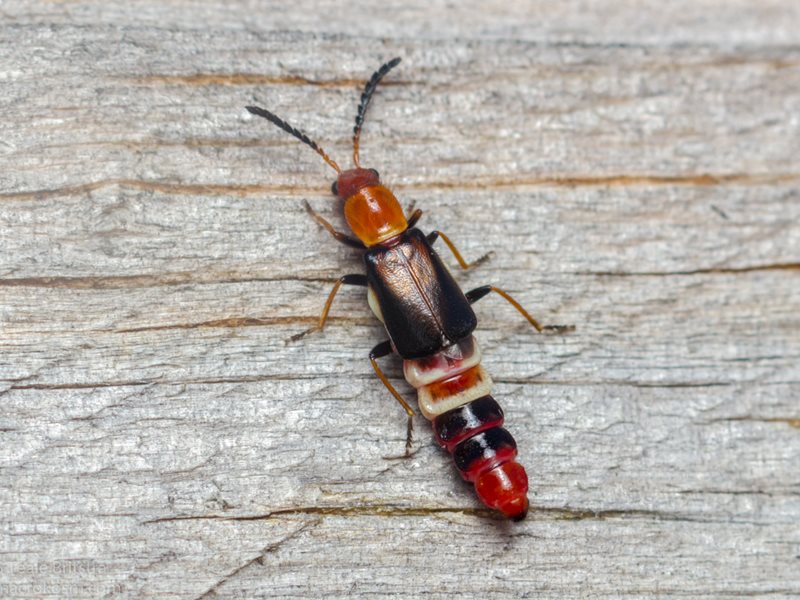
Carphurus

Carphurus sp., copyright Teale Britstra.


Belongs within: Melyridae.

Carphurus is a genus of soft-bodied beetles with shortened elytra.

Characters (from Lea 1909): Antenna not flabellate, head usually more or less convex in male. Elytra not covering abdomen. Body with exsertile vesicles.

<==Carphurus L09
    |--C. alterniventris Fairm. 1879 L09
    |--C. angustatus Lea 1895 L09
    |--C. apicalis Macleay 1872 M86
    |--C. apiciventris Lea 1895 [incl. C. apiciventris var. dubius Lea 1895] L09
    |--C. armipennis Fairm. 1879 L09
    |--C. atricapillis Lea 1909 L09
    |--C. atronitens Fairm. 1879 L09
    |--C. azureipennis Macleay 1872 M86
    |--C. basipennis Fairm. 1879 L09
    |--C. basiventris Lea 1895 L09
    |--C. bifoveatus Lea 1895 L09
    |--C. blackburni Lea 1895 L09
    |--C. cervicalis Germar 1848 L09
    |--C. cristatifrons Fairm. 1877 L09
    |--C. cyaneipennis Macleay 1872 M86 (see below for synonymy)
    |--C. cyanopterus (Bohem. 1858) [=Helcogaster cyanopterus] L09
    |--C. diopthalmus Fairm. 1877 L09
    |--C. elegans Lea 1909 L09
    |--C. elongatus Macleay 1872 M86
    |--C. facialis Fairm. 1877 L09
    |--C. fasciculatus Lea 1909 L09
    |--C. fasciipennis Fairm. 1879 L09
    |--C. fossor Lea 1909 L09
    |--C. frenchi Lea 1909 L09
    |--C. invenustus Lea 1895 L09
    |--C. laesifrons Fairm. 1879 L09
    |--C. latipennis Lea 1895 L09
    |--C. lepidus Lea 1895 L09
    |--C. longicollis Lea 1895 L09
    |--C. longipes Lea 1909 L09
    |--C. longus Lea 1909 L09
    |--C. maculiventris Lea 1909 L09
    |--C. marginiventris Fairm. 1879 L09
    |--C. myrmecophilus L19
    |--C. nubipennis Fairm. 1879 L09
    |--C. pallidifrons Lea 1909 L09
    |--C. pallidipennis Macleay 1872 M86
    |--C. philonthoides Fairm. 1879 L09
    |--C. pictipes Lea 1895 L09
    |--C. pravus Lea 1909 L09
    |--C. punctatus Lea 1909 L09
    |--C. rhagonychinus Fiarm. 1879 L09
    |--C. rhytideres Lea 1895 L09
    |--C. segmentarius Fairm. 1877 L09
    |--C. simulator Lea 1909 L09
    |--C. strigicollis Lea 1909 L09
    |--C. tachyporoides Fairm. 1877 L09
    |--C. telephoroides Fairm. 1879 L09
    |--C. triimpressus Lea 1909 L09
    |--C. uncinatus Lea 1909 L09
    |--C. variipennis Lea 1909 L09
    |--C. vigilans Lea 1909 L09
    `--C. xanthochrous Fairm. 1887 L09

Carphurus cyaneipennis Macleay 1872 M86 [incl. C. cyaneipennis var. aeneipennis Fairm. 1877 L09, C. testaceipes Lea 1895 L09]

*Type species of generic name indicated

REFERENCES

[L09] Lea, A. M. 1909. Revision of the Australian and Tasmanian Malacodermidae. Trans. Ent. Soc. Lond. 1909 (1): 45–251, pls 2–6.

[L19] Lea, A. M. 1919. Notes on some miscellaneous Coleoptera with descriptions of new species.—Part V. Transactions of the Royal Society of South Australia 43: 166–261, pls 25–27.

[M86] Masters, G. 1886. Catalogue of the described Coleoptera of Australia. Part IV. Proceedings of the Linnean Society of New South Wales, series 2, 1 (2): 259–380.

Hypattalus

Hypattalus distortipes, from Insects of Tasmania.


Belongs within: Melyridae.

Hypattalus is a genus of soft-bodied beetles found in Australia.

Characters (from Lea 1909): Antenna eleven-segmented; elytra covering abdomen; body with exsertile vesicles.

<==Hypattalus L09
    |--H. abdominalis (Erich. 1842) (see below for synonymy) L09
    |--H. alphabeticus Lea 1898 L09
    |--H. australis (Fairm. 1877) [=Attalus australis] L09
    |--H. calcaratus Lea 1909 L09
    |--H. carteri Lea 1909 L09
    |--H. collaris Lea 1898 L09
    |--H. dentipes Lea 1909 L09
    |--H. dispar Lea 1898 L09
    |--H. distortipes Lea 1909 L09
    |--H. elegans Blackb. 1894 [incl. H. elegans var. tasmaniensis Lea 1909] L09
    |--H. exilis Lea 1909 L09
    |--H. flaviventris Lea 1909 L09
    |--H. longicornis Lea 1898 L09
    |--H. mirabilis Lea 1898 L09
    |--H. montanus Lea 1909 L09
    |--H. mucronatus Lea 1909 L09
    |--H. pulcherrimus Lea 1898 L09
    |--H. punctulatus Blackb. 1894 L09
    |--H. sordidus Lea 1909 L09
    |--H. violaceus Lea 1898 L09
    `--H. viridis Lea 1898 L09

Hypattalus abdominalis (Erich. 1842) [=Attalus abdominalis; incl. H. brevicornis Lea 1898, H. brevicornis var. occidentalis Lea 1898] L09

*Type species of generic name indicated

REFERENCES

[L09] Lea, A. M. 1909. Revision of the Australian and Tasmanian Malacodermidae. Trans. Ent. Soc. Lond. 1909 (1): 45–251, pls 2–6.

Melyridae

Balanophorus sp., from Brisbane Insects.


Belongs within: Cleroidea.
Contains: Dasytes, Laius, Hypattalus, Carphurus, Helcogaster, Malachius.

The Melyridae are a group of relatively soft-bodied beetles that are usually predacious or scavengers as larvae but commonly flower-feeders as adults. Members of the subfamily Malachiinae are strikingly bicoloured in red or yellow and blue or black, and often have the elytra reduced to expose the abdomen (Lawrence & Britton 1991). The elytra are not reduced in members of the subfamilies Melyrinae and Dasytinae; Melyrinae are often brightly coloured (bicoloured as in Malachiinae or metallic blue or green) whereas Dasytinae are usually uniformly black, brown or yellow.

Characters (from Lawrence & Britton 1991): Oblong to elongate, somewhat flattened, soft-bodied, usually clothed with decumbent hairs and scattered erect setae, either uniformly black or grey or bicoloured with red or yellow and blue or black . Labrum well sclerotised; tarsal claws toothed or provided with a pair of fleshy appendages; elytra sometimes very short, exposing several abdominal tergites; eversible vesicles often on prothorax, mesothorax and abdomen. Larvae elongate, slightly flattened, lightly sclerotised, except for head, T9 and thoracic plates, red or pink in colour; head with long epicranial stem, no median endocarina, and lightly sclerotised gular and para-gular areas, so that head capsule appears to be open behind ventral mouthparts; mesal appendage at base of mandible.

Melyridae [Malachiidae]
    |--Dasytinae [Dasytidae] B14
    |    |--Enicopus (Parahenicopus) lopezcoloni Bahillo de la Puebla 2005 F05
    |    |--Trichochrous BM76
    |    |--Amecocerus cervicalis BM76
    |    `--Dasytes B14
    |--Melyrinae B14
    |    |--Astylus [Astylini] B14
    |    |    `--A. atromaculatus (Blanchard 1843) B14
    |    |--Melyrodes B14
    |    |    |--M. basalis (LeConte 1852) [=Dasytes basalis] B14
    |    |    |--M. cribatus B14
    |    |    `--M. floridiana B14
    |    `--Melyris B14
    |         |--M. bicolor G89
    |         |--M. corrosa G01
    |         |--M. festiva G01
    |         |--M. (Zyga) oblonga G20
    |         |--M. rubripes Lucas 1846 E12
    |         |--M. rufiventris G01
    |         `--M. (Melyris) viridis G20
    `--Malachiinae [Malachiides] B14
         |--Laius LB91
         |--Hypattalus LB91
         |--Carphurus LB91
         |--Helcogaster LB91
         |--Flabellolaius LB91
         |--Malachius B14
         |--Dicranolaius LB91
         |    |--D. bellulus LB91
         |    `--D. villosus LB91
         |--Collops B14
         |    |--C. balteatus LeConte 1852 B14
         |    |--C. punctulatus B14
         |    |--C. quadrimaculatus B14
         |    `--C. versatilis B14
         |--Neocarphurus Lea 1898 L09
         |    |--N. basizonis Lea 1901 L09
         |    |--N. chlorops Lea 1898 L09
         |    |--N. coatesi Lea 1909 L09
         |    |--N. impunctatus (Lea 1895) [=Carphurus impunctatus] L09
         |    |--N. sobrinus Lea 1909 L09
         |    `--N. tuberculatus (Lea 1895) [=Helcogaster tuberculatus] L09
         `--Balanophorus LB91
              |--B. ater Lea 1909 L09
              |--B. biplagiatus Fairm. 1879 [=Carphurus biplagiatus] L09
              |--B. brevipennis (Germ. 1848) [=Carphurus brevipennis] L09
              |--B. janthinipennis Fairm. 1879 L09
              |--B. macleayi Lea 1895 L09
              |--B. mastersi Macleay 1872 M86
              |--B. megalops Lea 1901 L09
              |--B. pictus Lea 1909 L09
              |--B. scapulatus (Fairm. 1879) [=Carphurus scapulatus] L09
              `--B. victoriensis Lea 1909 L09

Melyridae incertae sedis:
  Simoderus MC13
  Listrus MW15
  Attalus G01
    |--A. albofasciatus Gorham 1901 G01
    |--A. lugens Gorham 1901 G01
    |--A. ornatipennis G01
    `--A. ridens Gorham 1901 G01
  Anthocomus felix Gorham 1901 G01
  Chalicorus G01
    |--C. collaris G01
    |--C. formicarius Gorham 1901 G01
    `--C. vinulus G01
  Myrmecospecta G01
  Hapalochrus G01
    |--H. aerosus Gorham 1901 G01
    |--H. cinctus M86
    `--H. mashunus Gorham 1901 G01
  Hedybius G01
    |--H. albipennis Gorham 1901 G01
    |--H. anceps G01
    |--H. lividus G01
    |--H. superciliosus G01
    `--H. variicornis G01

*Type species of generic name indicated

REFERENCES

[BM76] Bohart, R. M., & A. S. Menke. 1976. Sphecid Wasps of the World. University of California Press: Berkeley.

[B14] Bouchard, P. (ed.) 2014. The Book of Beetles: A lifesize guide to six hundred of nature's gems. Ivy Press: Lewes (United Kingdom).

[E12] Evenhuis, N. L. 2012. Publication and dating of the Exploration Scientifique de l’Algérie: Histoire Naturelle des Animaux Articulés (1846–1849) by Pierre Hippolyte Lucas. Zootaxa 3448: 1–61.

[F05] Fernández, J. 2005. Noticia de nuevos táxones para la ciencia en el ámbito Íbero-Balear y Macaronésico. Nuevos táxones animales descritos en la península Ibérica y Macaronesia desde 1994 (IX). Graellsia 61 (2): 261–282.

[G89] Gestro, R. 1889. Viaggio ab Assab nel Mar Rosso dei signori G. Doria ed O. Beccari con il R. Avviso «Esploratore» dal 16 Novembre 1879 al 26 Febbraio 1880.—IV. Coleotteri. Annali del Museo Civico di Storia Naturale di Genova, Serie 2a, 7: 5–72.

[G20] Goldfuss, G. A. 1820. Handbuch der Naturgeschichte vol. 3. Handbuch der Zoologie pt 1. Johann Leonhard Schrag: Nürnberg.

[G01] Gorham, H. S. 1901. Descriptions of genera and species of Coleoptera from South Africa (continued). Annals and Magazine of Natural History, series 7, 7: 349–365.

[LB91] Lawrence, J. F., & E. B. Britton. 1991. Coleoptera (beetles). In: CSIRO. The Insects of Australia: A textbook for students and research workers 2nd ed. vol. 2 pp. 543–683. Melbourne University Press: Carlton (Victoria).

[L09] Lea, A. M. 1909. Revision of the Australian and Tasmanian Malacodermidae. Trans. Ent. Soc. Lond. 1909 (1): 45–251, pls 2–6.

[MC13] Majer, J. D., S. K. Callan, K. Edwards, N. R. Gunawardene & C. K. Taylor. 2013. Baseline survey of the terrestrial invertebrate fauna of Barrow Island. Records of the Western Australian Museum Supplement 83: 13–112.

[M86] Masters, G. 1886. Catalogue of the described Coleoptera of Australia. Part IV. Proceedings of the Linnean Society of New South Wales, series 2, 1 (2): 259–380.

[MW15] McKenna, D. D., A. L. Wild, K. Kanda, C. L. Bellamy, R. G. Beutel, M. S. Caterino, C. W. Farnum, D. C. Hawks, M. A. Ivie, M. L. Jameson, R. A. B. Leschen, A. E. Marvaldi, J. V. McHugh, A. F. Newton, J. A. Robertson, M. K. Thayer, M. F. Whiting, J. F. Lawrence, A. Ślipiński, D. R. Maddison & B. D. Farrell. 2015. The beetle tree of life reveals that Coleoptera survived end-Permian mass extinction to diversify during the Cretaceous terrestrial revolution. Systematic Entomology 40 (4): 835–880.

Last updated: 12 November 2020.

Cleridae

Lasiodera rufipes, from Opitz (2019).


Belongs within: Cleroidea.
Contains: Lemidia, Stigmatium, Eleale, Opilo, Aulicus, Tillinae, Clerinae, Necrobia.

The Cleridae, checkered beetles, are a family of elongate, hairy beetles, some if which are brightly coloured. Most clerids are predatory on other insects both as adults and larvae. Members of the family have five-segmented tarsi but the fourth tarsomere is concealed within the third in the Korynetinae. The Hydnocerinae are characterised by enormous eyes and short antennae that are not long enough to reach the base of the pronotum.

Characters (from Lawrence & Britton 1991): Elongate, parallel-sided, clothed with erect, or erect and decumbent, hairs, often either metallic in colour or patterned with red or yellow. Head usually more or less deflexed; eyes usually slightly to strongly emarginate; antennae short; labial palps often enlarged and securiform; pronotum usually without lateral carinae; prosternum well developed in front of coxae; tarsi with one or more segments lobed or with membranous appendages; first tarsal segment sometimes reduced and concealed within tibial apex. Larvae elongate, cylindrical to somewhat flattened, lightly sclerotised except for head, one or more tergal plates on thorax and T9 but cuticle often pigmented with yellow, pink, blue or brown. Head well sclerotised dorsally and ventrally; gula long and narrow; mandible with hyaline process at base; epicranial stem usually absent, median endocarina usually present.

Cleridae [Clerii]
    |--+--Tillinae MW15
    |  `--Clerinae MW15
    `--Korynetinae B14
         |--Pelonium leucophaeum (Klug 1842) B14
         |--Necrobia MW15
         |--Corynetes Mas86
         |    |--C. rufipes [=Anobium rufipes; incl. C. australis] B35
         |    `--C. unicolor Chev. 1878 Mas86
         |--Chariessa B14
         |    |--C. dichroa B14
         |    `--C. elegans Horn 1870 B14
         `--Lasiodera B14
              |--L. rufipes (Klug 1842) [=Enoplium rufipes] B14
              `--L. zonata B14

Cleridae incertae sedis:
  Lemidia LB91
  Phlogistomorpha YHT05
  Phloiocopus tricolor G89
  Tarsobaenus letourneauae DL99
  Phlogistus eximius B70
  Stigmatium ZS10
  Eurymetopum MC94
    |--E. maculatum MC94
    `--E. modestum MC94
  Eleale YHT05
  Allelidea MC13
    |--A. brevipennis Pascoe 1860 Mas86
    `--A. ctenostomoides Waterh. 1836 Mas86
  Opilo Mas86
  Monophylla LB91
  Scrobiger LB91
    |--S. albocinctus Pascoe 1860 Mas86
    |--S. idoneus Newm. 1842 Mas86
    `--S. splendidus Newm. 1840 [incl. S. reichei] Mas86
  Tarsosteninae LB91
    |--Paratillus LB91
    |    |--P. basalis Gorham 1878 Mas86
    |    `--P. carus (Newm. 1840) [=Clerus carus] Mas86
    `--Tarsostenus LB91
         |--T. mastersi Macleay 1872 Mas86
         |--T. pulcher Macleay 1872 Mas86
         |--T. univittatus LB91
         `--T. zonatus Mas86
  Hydnocerinae B14
    |--Hydnocera G01
    |    |--H. bella Westw. 1852 Mas86
    |    `--H. punctipennis G01
    `--Phyllobaenus B14
         |--P. pallipennis (Say 1825) B14
         `--P. verticalis B14
  Enoplium serraticorne [=Tillus serraticornis] L02
  Omadius Mac86
    |--O. olivaceus Westw. 1852 Mas86
    `--O. prasinus Westw. 1852 Mas86
  Natalis Mas86
    |--N. cribricollis Mas86
    |--N. mastersi Macleay 1872 Mas86
    |--N. porcata [incl. N. heros] Mas86
    `--N. titana Thoms. 1860 Mas86
  Orthrius cylindricus Gorham 1876 Mas86
  Cleromorpha novenguttatus (Westw. 1852) [=Clerus novemguttatus] Mas86
  Aulicus Mas86
  Olesterus Mas86
    |--O. australis Mas86
    |--O. cruentatus Chev. 1874 Mas86
    `--O. gracilis Gorham 1876 Mas86
  Eburiphora patricia Mas86
  Tenerus Mas86
    |--T. abbreviatus White 1849 Mas86
    |--T. ruficollis Macleay 1872 Mas86
    `--T. telephroides Pascoe 1860 Mas86
  Pylus Mas86
    |--P. anthicoides Newm. 1842 Mas86
    |--P. bicinctus Newm. 1842 Mas86
    |--P. fatuus [incl. P. ochropus, P. passerinii] Mas86
    `--P. pallipes Macleay 1872 Mas86
  Tanocleria Hong 2002 H02
    `--*T. tenuis Hong 2002 H02
  Lissaulicus laevis G01
  Neohydnus G01
  Mastigus G20
    |--M. palpalis L02
    `--M. spinicornis [=Ptinus spinicornis] L02

*Type species of generic name indicated

REFERENCES

[B35] Boisduval, J. B. 1835. Voyage de Découvertes de l’Astrolabe. Exécuté par ordre du Roi, pendant les années 1826–1827–1828–1829, sous le commandement de M. J. Dumont d'Urville. Faune entomologique de l'océan Pacifique, avec l'illustration des insectes nouveaux recueillis pendant le voyage vol. 2. Coléoptères et autres ordres. J. Tastu: Paris.

[B14] Bouchard, P. (ed.) 2014. The Book of Beetles: A lifesize guide to six hundred of nature's gems. Ivy Press: Lewes (United Kingdom).

[B70] Britton, E. B. 1970. Coleoptera (beetles). In: CSIRO. The Insects of Australia: A textbook for students and research workers pp. 495–621. Melbourne University Press.

[DL99] Dyer, L. A., & D. K. Letourneau. 1999. Relative strengths of top-down and bottom-up forces in a tropical forest community. Oecologia 119: 265–274.

[G89] Gestro, R. 1889. Viaggio ab Assab nel Mar Rosso dei signori G. Doria ed O. Beccari con il R. Avviso «Esploratore» dal 16 Novembre 1879 al 26 Febbraio 1880.—IV. Coleotteri. Annali del Museo Civico di Storia Naturale di Genova, Serie 2a, 7: 5–72.

[G20] Goldfuss, G. A. 1820. Handbuch der Naturgeschichte vol. 3. Handbuch der Zoologie pt 1. Johann Leonhard Schrag: Nürnberg.

[G01] Gorham, H. S. 1901. Descriptions of genera and species of Coleoptera from South Africa (continued). Annals and Magazine of Natural History, series 7, 7: 349–365.

[H02] Hong Y. 2002. Amber Insect of China. Beijing Scientific and Technological Publishing House.

[L02] Latreille, P. A. 1802. Histoire Naturelle, générale et particulière des crustacés et des insectes vol. 3. Familles naturelles des genres. F. Dufart: Paris.

[LB91] Lawrence, J. F., & E. B. Britton. 1991. Coleoptera (beetles). In: CSIRO. The Insects of Australia: A textbook for students and research workers 2nd ed. vol. 2 pp. 543–683. Melbourne University Press: Carlton (Victoria).

[Mac86] Macleay, W. 1886. The insects of the Fly River, New Guinea, "Coleoptera". Proceedings of the Linnean Society of New South Wales, series 2, 1 (1): 136–157.

[MC13] Majer, J. D., S. K. Callan, K. Edwards, N. R. Gunawardene & C. K. Taylor. 2013. Baseline survey of the terrestrial invertebrate fauna of Barrow Island. Records of the Western Australian Museum Supplement 83: 13–112.

[Mas86] Masters, G. 1886. Catalogue of the described Coleoptera of Australia. Part IV. Proceedings of the Linnean Society of New South Wales, series 2, 1 (2): 259–380.

[MW15] McKenna, D. D., A. L. Wild, K. Kanda, C. L. Bellamy, R. G. Beutel, M. S. Caterino, C. W. Farnum, D. C. Hawks, M. A. Ivie, M. L. Jameson, R. A. B. Leschen, A. E. Marvaldi, J. V. McHugh, A. F. Newton, J. A. Robertson, M. K. Thayer, M. F. Whiting, J. F. Lawrence, A. Ślipiński, D. R. Maddison & B. D. Farrell. 2015. The beetle tree of life reveals that Coleoptera survived end-Permian mass extinction to diversify during the Cretaceous terrestrial revolution. Systematic Entomology 40 (4): 835–880.

[MC94] Morrone, J. J., & J. M. Carpenter. 1994. In search of a method for cladistic biogeography: an empirical comparison of component analysis, Brooks parsimony analysis, and three-area statements. Cladistics 10: 99–153.

[YHT05] Yates, C. J., S. D. Hopper & R. H. Taplin. 2005. Native insect flower visitor diversity and feral honeybees on jarrah (Eucalyptus marginata) in Kings Park, an urban bushland remnant. Journal of the Royal Society of Western Australia 88 (4): 147–153.

[ZS10] Zborowski, P., & R. Storey. 2010. A Field Guide to Insects in Australia 3rd ed. Reed New Holland: Sydney.

Last updated: 12 November 2020.