Hipponicidae

Hipponix leptus, copyright Conquiliologistas do Brasil.


Belongs within: Hypsogastropoda.

The Hipponicidae, hoof shells or horse-hoof limpets, are a group of limpet-like gastropods that are sedentary as adults, either on rocks or the shells of other animals. In some species, a calcareous basal plate may be secreted under the animal. The shell of Cheilea bears an internal projection forming an incomplete cone.

Synapomorphies (from Simone 2011): Shell with suture absent; umbilicus absent. Neck lacking lateral flattened lappets. Haemocoel with distinct head muscle. Pallial cavity less than one-quarter of animal length; osphradium ridge-like and smooth; osphradium leaflets absent. Visceral mass sac-like. Odontophore muscle pair 10 small; stomach with single duct to digestive gland. Exophallic penis present ventral to right tentacle; female gonad somewhat in centre of ventral region.

<==Hipponicidae [Hipponicacea, Hipponicoidea, Hipponycinae]
    |  i. s.: Antisabia MG-H11
    |           |--A. barbatus M54
    |           `--A. foliacea (Quoy & Gaimard 1835) MG-H11
    |--Cheilea Modeer 1793 S11, BR05 [Cheileacea, Cheileidae]
    |    `--*C. equestris (Linnaeus 1758) BR17 [=Patella equestris H09; incl. C. equestris striata Usticke 1959 BC01]
    `--+--Sabia Gray 1841 S11, P61 [=Amalthea Schumacher 1817 non Rafinesque 1815 BR17; Amaltheacea]
       |    |--*S. conica (Schumacher 1817) P61, S11 (see below for synonymy)
       |    `--S. wyattae Powell 1958 P61
       `--+--Malluvium S11
          |    |--M. calcareum PG98
          |    `--M. devotus (Hedley 1904) S11
          `--Hipponix Defrance 1819 S11, BR05
               |  i. s.: *H. cornucopiae (Röding 1798) [=Patella cornucopiae] BR17
               |         H. antiquatus Linnaeus 1767 O27
               |           |--H. a. antiquatus O27
               |           `--H. a. cranioides Carpenter 1864 O27
               |         H. barbata Sowerby 1835 O27 [=Hipponyx barbata H09]
               |         H. benthophilus (Dall 1889) B00
               |         H. cranioides Carpenter 1864 C64
               |         H. dixoni TTE93
               |         H. pilosus EO64
               |         H. planatus C64
               |         H. radiatus [=Pileopsis radiata] H86
               |         H. serratus Carpenter 1857 O27
               |         H. tumens Carpenter 1865 O27
               |--+--H. grayanus Menke 1853 S11
               |  `--H. leptus Simone 2002 S11
               `--+--H. incurvus (Gmelin 1791) S11
                  `--+--H. costellatus Carpenter 1856 S11
                     `--H. subrufus (Lamarck 1819) S11

*Sabia conica (Schumacher 1817) P61, S11 [=*Amalthea conica BR17, P61, Hipponix conicus BD86; incl. H. australis (Quoy & Gaimard 1834) BD86]

*Type species of generic name indicated

REFERENCES

[B00] Bandel, K. 2000. The new family Cortinellidae (Gastropoda, Mollusca) connected to a review of the evolutionary history of the subclass Neritimorpha. Neues Jahrbuch für Geologie und Paläontologie—Abhandlungen 217 (1): 111–129.

[BD86] Barash, A., & Z. Danin. 1986. Further additions to the knowledge of Indo-Pacific Mollusca in the Mediterranean Sea (Lessepsian migrants). Spixiana 9 (2): 117–141.

[BR05] Bouchet, P., & J.-P. Rocroi. 2005. Classification and nomenclator of gastropod families. Malacologia 47 (1–2): 1–397.

[BR17] Bouchet, P., J.-P. Rocroi, B. Hausdorf, A. Kaim, Y. Kano, A. Nützel, P. Parkhaev, M. Schrödl & E. E. Strong. 2017. Revised classification, nomenclator and typification of gastropod and monoplacophoran families. Malacologia 61 (1–2): 1–526.

[BC01] Boyko, C. B., & J. R. Cordeiro. 2001. Catalog of Recent type specimens in the Division of Invertebrate Zoology, American Museum of Natural History. V. Mollusca, part 2 (class Gastropoda [exclusive of Opisthobranchia and Pulmonata], with supplements to Gastropoda [Opisthobranchia], and Bivalvia). Bulletin of the American Museum of Natural History 262: 1–170.

[C64] Carpenter, P. P. 1864. Supplementary report on the present state of our knowledge with regard to the Mollusca of the west coast of North America. Report of the British Association for the Advancement of Science 33: 517–686.

[EO64] Emerson, W. K., & W. E. Old Jr. 1964. Additional records from Cocos Island. Nautilus 77 (3): 90–92.

[H09] Hedley, C. 1909. The Marine Fauna of Queensland: Address by the President of Section D. Australasian Association for the Advancement of Science: Brisbane.

[H86] Hutton, F. W. 1886. The Mollusca of the Pareora and Oamaru systems of New Zealand. Proceedings of the Linnean Society of New South Wales, series 2, 1 (1): 205–237.

[M54] Macpherson, J. H. 1954. Molluscs (sea shells and snails). In: Willis, J. M. (ed.) The Archipelago of the Recherche pp. 55–63. Australian Geographical Society: Melbourne.

[MG-H11] McEnnulty, F. R., K. L. Gowlett-Holmes, A. Williams, F. Althaus, J. Fromont, G. C. B. Poore, T. D. O’Hara, L. Marsh, P. Kott, S. Slack-Smith, P. Alderslade & M. V. Kitahara. 2011. The deepwater megabenthic invertebrates on the western continental margin of Australia (100–1100 m depths): composition, distribution and novelty. Records of the Western Australian Museum Supplement 80: 1–191.

[O27] Oldroyd, I. S. 1927. The Marine Shells of the West Coast of North America vol. 2 pt 3. Stanford University Press: Stanford University (California).

[P61] Powell, A. W. B. 1961. Shells of New Zealand: An illustrated handbook 4th ed. Whitcombe and Tombs Limited: Christchurch.

[PG98] Probert, P. K., & S. L. Grove. 1998. Macrobenthic assemblages of the continental shelf and upper slope off the west coast of South Island, New Zealand. Journal of the Royal Society of New Zealand 28: 259–280.

[S11] Simone, L. R. L. 2011. Phylogeny of the Caenogastropoda (Mollusca), based on comparative morphology. Arquivos de Zoologia 42 (4): 161–323.

[TTE93] Tracey, S., J. A. Todd & D. H. Erwin. 1993. Mollusca: Gastropoda. In: Benton, M. J. (ed.) The Fossil Record 2 pp. 131–167. Chapman & Hall: London.

Last updated: 16 September 2021.

Bursidae

Bursa cubaniana, copyright Jacksonville Shell Club.


Belongs within: Tonnoidea.

The Bursidae, frog shells, are a group of marine gastropods that are most commonly found in shallow water among coral or rocks. The shell is usually heavy and strongly ornamented, commonly with a warty appearance that gives rise to the vernacular name. They may be distinguished from related, similar shells among the tritons and trumpets by the presence of a strong notch at the posterior end of the aperture (Wilson & Gillett 1971).

Characters (from Wilson & Gillett 1971): Shell usuall heavy, strongly nodulose or spiny, covered with calcareous growths; varices strong; anterior canal short; posterior canal represented by deep notch at posterior end of aperture; operculum horny.

<==Bursidae
    |--Hanaibursa aequilana (Parona 1909) TTE93
    |--Tutufa Jousseaume 1881 [Tutufinae] BR05
    |    |  i. s.: T. bufo Röding 1798 MG-H11
    |    |         T. rubeta (Linnaeus 1758) BW09 [=Bursa rubeta WG71]
    |    |--*T. (Tutufa) bubo (Linnaeus 1758) BR17 (see below for synonymy)
    |    `--T. (Tutufella Beu 1981) BC01
    |         `--T. (T.) nigrita Mühlhäusser & Blöcher 1979 BC01
    |--Bufonaria Schumacher 1817 O27
    |    |--B. bufo (Bruguière 1792) H14
    |    |--B. californica (Hinds 1843) [=Bursa (Bufonaria) californica] O27
    |    |--B. (Bufonaria) cristinae Parth 1989 BC01
    |    |--B. crumena (Lamarck 1816) MG-H11
    |    |--B. fernandesi Beu 1977 ES88
    |    `--B. rana (Linnaeus 1758) MG-H11
    `--Bursa Röding 1798 [Bursinae] BR05
         |  i. s.: B. bitubercularis (Lamarck 1822) [=Ranella bitubercularis] H09
         |         B. corrugata (Reeve 1844) S11
         |         B. cruentata (Sowerby 1841) BW09
         |         B. fuscocostata Dkr. 1862 C64
         |         B. humilis Beu 1981 MG-H11
         |         B. lamarckii (Deshayes 1853) BW09
         |         B. lampas (Linnaeus 1758) [=Murex lampas] H09
         |         B. latitudo Garrard 1961 WG71
         |         B. mammata H15
         |         B. pusilla (Broderip 1833) [=Ranella pusilla, Gyrineum pusillum] H09
         |         B. rana (Linnaeus 1758) WG71 [=Murex rana H09; incl. B. cavitensis Reeve 1843 WG71]
         |         B. rhodostoma (Beck in Sowerby 1835) BW09
         |         B. rosa Perry 1811 [incl. B. siphonata Reeve 1844] WG71
         |         B. saundersi Adegoke 1977 TTE93
         |         B. tenuisculpta (Dautzenberg & Fisher 1906) S11
         |         B. thomae (Orbigny 1842) S11
         |         B. venustula (Reeve 1844) [=Ranella venustula] H09
         |--B. (Bursa) BC01
         |    |--*B. (B.) bufonia (Gmelin 1791) [=Murex bufonius; incl. B. monitata Röding 1798] BR17
         |    |--B. (B.) davidboschi Beu 1986 BC01
         |    |--B. (B.) granifera [=Ranella granifera] O27
         |    |--B. (B.) lucaensis Parth 1991 BC01
         |    `--B. (B.) grayana (Dunker 1868) [incl. B. pacamoni Matthews & Coelho 1971] BC01
         |--B. (Colubrellina Fischer 1884) BC01, WG71
         |    `--B. (C.) quirihorai Beu 1986 BC01
         `--B. (Dulcerana Iredale 1931) WG71
              |--B. (D.) cubaniana (Orbigny 1842) BC01, S11 (see below for synonymy)
              `--B. (D.) granularis (Röding 1798) BW09, WG71 (see below for synonymy)

Bursa (Dulcerana) cubaniana (Orbigny 1842) BC01, S11 [=B. granularis cubaniana BC01; incl. B. cubaniana var. intermedia Usticke 1959 BC01, B. corrugata var. lineata Usticke 1959 BC01]

Bursa (Dulcerana) granularis (Röding 1798) BW09, WG71 [=Colubrellina (D.) granularis WG71; incl. C. affinis Broderip 1832 WG71, C. semigranosa Lamarck 1822 WG71]

*Tutufa (Tutufa) bubo (Linnaeus 1758) BR17 [=Murex bubo BR17, Bursa bubo WG71; incl. B. rubeta gigantea Smith 1914 WG71, T. lampas Linnaeus 1758 WG71]

*Type species of generic name indicated

REFERENCES

[BR05] Bouchet, P., & J.-P. Rocroi. 2005. Classification and nomenclator of gastropod families. Malacologia 47 (1–2): 1–397.

[BR17] Bouchet, P., J.-P. Rocroi, B. Hausdorf, A. Kaim, Y. Kano, A. Nützel, P. Parkhaev, M. Schrödl & E. E. Strong. 2017. Revised classification, nomenclator and typification of gastropod and monoplacophoran families. Malacologia 61 (1–2): 1–526.

[BC01] Boyko, C. B., & J. R. Cordeiro. 2001. Catalog of Recent type specimens in the Division of Invertebrate Zoology, American Museum of Natural History. V. Mollusca, part 2 (class Gastropoda [exclusive of Opisthobranchia and Pulmonata], with supplements to Gastropoda [Opisthobranchia], and Bivalvia). Bulletin of the American Museum of Natural History 262: 1–170.

[BW09] Bryce, C., & C. Whisson. 2009. The macromolluscs of Mermaid (Rowley Shoals), Scott and Seringapatam Reefs, Western Australia. Records of the Western Australian Museum Supplement 77: 177–208.

[C64] Carpenter, P. P. 1864. Supplementary report on the present state of our knowledge with regard to the Mollusca of the west coast of North America. Report of the British Association for the Advancement of Science 33: 517–686.

[ES88] Emerson, W. K., & W. E. Sage III. 1988. A new species of Vasum (Gastropoda: Turbinellidae) from off Somalia. Nautilus 102 (1): 36–39.

[H09] Hedley, C. 1909. The Marine Fauna of Queensland: Address by the President of Section D. Australasian Association for the Advancement of Science: Brisbane.

[H15] Hedley, C. 1915. Presidential address. Journal and Proceedings of the Royal Society of New South Wales 49 (1): 1–77, pls 1–7.

[H14] Hosie, A. M. 2014. Review of the stalked barnacle genus Koleolepas (Cirripedia: Thoracica: Koleolepadidae), with new records from Australian waters. Records of the Western Australian Museum 29 (1): 1–9.

[MG-H11] McEnnulty, F. R., K. L. Gowlett-Holmes, A. Williams, F. Althaus, J. Fromont, G. C. B. Poore, T. D. O’Hara, L. Marsh, P. Kott, S. Slack-Smith, P. Alderslade & M. V. Kitahara. 2011. The deepwater megabenthic invertebrates on the western continental margin of Australia (100–1100 m depths): composition, distribution and novelty. Records of the Western Australian Museum Supplement 80: 1–191.

[O27] Oldroyd, I. S. 1927. The Marine Shells of the West Coast of North America vol. 2 pt 2. Stanford University Press: Stanford University (California).

[S11] Simone, L. R. L. 2011. Phylogeny of the Caenogastropoda (Mollusca), based on comparative morphology. Arquivos de Zoologia 42 (4): 161–323.

[TTE93] Tracey, S., J. A. Todd & D. H. Erwin. 1993. Mollusca: Gastropoda. In: Benton, M. J. (ed.) The Fossil Record 2 pp. 131–167. Chapman & Hall: London.

[WG71] Wilson, B. R., & K. Gillett. 1971. Australian Shells: illustrating and describing 600 species of marine gastropods found in Australian waters. A. H. & A. W. Reed: Sydney.

Last updated: 6 June 2021.

Personidae

Distorsio decipiens, copyright H. Zell.


Belongs within: Tonnoidea.

The Personidae are a small group of marine gastropods with a characteristically distorted coiling, found at moderate depths in warm waters. Past classifications included them among the Ranellidae but more recent authors have argued that many of the common features of the two families evolved in parallel. Within the Personidae, members of the genus Distorsio are generally larger than species of Personopsis.

Characters (from here): Whorls knobbed, with distorted coiling; operculum small, black; radula with spiny crescent-shaped teeth.

<==Personidae BR05
    |--Personopsis purpurata Beu 1998 S11
    |--Calcarella Souleyet 1850 [Calcarellidae] BR05
    |    `--*C. spinosa Souleyet 1850 BR17
    `--Distorsio Röding 1798 [=Persona Montfort 1810; Distorsiinae, Distorsioninae, Personina, Personinae] BR05
         |  i. s.: ‘Persona’ constrictus C64
         |         D. euconstricta Beu 1986 BC01
         |         D. graceiellae Parth 1989 BC01
         |         D. habei Lewis 1972 MG-H11
         |         D. minoruohnishii Parth 1989 BC01
         |         D. perdistorta Fulton 1938 ES90
         |         D. smithi von Maltzan 1844 ES90
         |         D. ventricosa Kronenberg 1994 BC01
         |         D. (Personella Conrad 1865) C75
         |           |--D. (*P.) septemdentata Gabb 1860 C75
         |           |--D. (P.) beui Maxwell 1968 C75
         |           `--D. (P.) pusilla Pease 1861 [=Persona pusilla] C75
         |         D. (Rhysema Clench & Turner 1956) C75
         |           `--D. (R.) reticulata Roeding 1798 C75
         |--D. clathrata (Lamarck 1816) S11 (see below for synonymy)
         `--+--D. (Distorsio) BC01
            |    |--*D. (D.) anus (Linnaeus 1758) BR17, S11 [=Murex anus BR17, *Persona anus BR17]
            |    |--D. (D.) decussata (Valenciennes 1832) [=Tritonium decussatum] BC01
            |    `--D. (D.) jenniernestae Emerson & Piech 1992 BC01
            `--+--D. decipiens (Reeve 1844) S11
               `--D. reticularis (Linné 1758) S11 (see below for synonymy)

Distorsio clathrata (Lamarck 1816) S11 [=Triton clathratus ES90; incl. T. ridens Reeve 1844 ES90, Distorsio ridens ES90, Persona ridens C64, D. robinsoni Petuch 1987 ES90]

Distorsio reticularis (Linné 1758) S11 [=Persona reticularis G79; incl. Murex cancellinus de Roissy 1805 ES90, D. cancellinus ES90, D. reticulata (Röding 1798) ES90]

*Type species of generic name indicated

REFERENCES

[BR05] Bouchet, P., & J.-P. Rocroi. 2005. Classification and nomenclator of gastropod families. Malacologia 47 (1–2): 1–397.

[BR17] Bouchet, P., J.-P. Rocroi, B. Hausdorf, A. Kaim, Y. Kano, A. Nützel, P. Parkhaev, M. Schrödl & E. E. Strong. 2017. Revised classification, nomenclator and typification of gastropod and monoplacophoran families. Malacologia 61 (1–2): 1–526.

[BC01] Boyko, C. B., & J. R. Cordeiro. 2001. Catalog of Recent type specimens in the Division of Invertebrate Zoology, American Museum of Natural History. V. Mollusca, part 2 (class Gastropoda [exclusive of Opisthobranchia and Pulmonata], with supplements to Gastropoda [Opisthobranchia], and Bivalvia). Bulletin of the American Museum of Natural History 262: 1–170.

[C64] Carpenter, P. P. 1864. Supplementary report on the present state of our knowledge with regard to the Mollusca of the west coast of North America. Report of the British Association for the Advancement of Science 33: 517–686.

[C75] Cernohorsky, W. O. 1975. The taxonomy of some Indo-Pacific Mollusca. Part 3. With descriptions of new taxa and remarks on an Ecuadorian fossil species of Turridae. Records of the Auckland Institute and Museum 12: 213–234.

[ES90] Emerson, W. K., & W. E. Sage III. 1990. Distorsio ridens (Reeve, 1844): a synonym of Distorsio clathrata (Lamarck, 1816) (Gastropoda: Personidae). Nautilus 103 (4): 131–135.

[G79] Guppy, R. J. L. 1879. First sketch of a marine invertebrate fauna of the Gulf of Paria and its neighbourhood. Part I.—Mollusca. Journal of Conchology 2: 151–172.

[MG-H11] McEnnulty, F. R., K. L. Gowlett-Holmes, A. Williams, F. Althaus, J. Fromont, G. C. B. Poore, T. D. O’Hara, L. Marsh, P. Kott, S. Slack-Smith, P. Alderslade & M. V. Kitahara. 2011. The deepwater megabenthic invertebrates on the western continental margin of Australia (100–1100 m depths): composition, distribution and novelty. Records of the Western Australian Museum Supplement 80: 1–191.

[S11] Simone, L. R. L. 2011. Phylogeny of the Caenogastropoda (Mollusca), based on comparative morphology. Arquivos de Zoologia 42 (4): 161–323.

Last updated: 7 June 2021.

Hypsogastropoda

Lyocyclus solutus, from Thiele (1925).


Belongs within: Gastropoda.
Contains: Coelostylinidae, Pseudozygopleuridae, Goniospiridae, Zygopleuridae, Vermetidae, Pseudomelaniidae, Epitoniidae, Littorinina, Stromboidea, Capulidae, Hipponicidae, Calyptraeidae, Naticidae, Cypraeoidea, Tonnoidea, Neogastropoda.

The Hypsogastropoda are a major clade of caenogastropods possessing an exophallic penis positioned behind the right cephalic tentacle (Simone 2011). They are primarily marine though several lineages have diversified in fresh water. Basal relationships within the hypsogastropods remain poorly established. However, a clade Latrogastropoda including the neogastropods and related taxa may be recognised by the presence of a pair of retractor muscles in association with the snout, an enlarged mantle border that covers the head when active, and a sharp pointed apex on the marginal radular teeth. Latrogastropoda may be divided between the Stromboidea and Rhynchogastropoda with the latter clade united by the presence of a retractible proboscis. A clade containing the Capuloidea, Hipponicidae and Calyptraeoidea contains species with a hairy periostracum and nuchal flaps on both sides of the head. The remaining Rhynchogastropoda, forming the clade Adenogastropoda, show a tendency towards predatory behaviour with a simplified stomach and modified foregut. The Siphonogastropoda, including the Cypraeoidea, Tonnoidea and Neogastropoda, share a fusiform shell, determinate growth, and a well-developed siphonal canal. Finally, the Tonnoidea and Neogastropoda are united by synapomorphies including a terminal nucleus on the operculum and development of the incurrent siphon into an exploratory structure (Simone 2011).

The Late Palaeozoic high-spired Pseudozygopleuroidea represent possible early precursors of the Hypsogastropoda.

Synapomorphies (from Simone 2011): Nephridial gland present. Loss of pair of auxiliary muscle (m12) of horizontal muscle (m6). Exophallic penis present, situated behind and at right of right cephalic tentacle, with respective duct. Development of albumen and capsule glands at pallial oviduct. Each statocyst with single statolith.

<==Hypsogastropoda (see below for synonymy)
    |--+--Pseudomelaniidae PC08
    |  `--Epitoniidae PC08
    `--+--‘Amauropsis’ rossiana Smith 1907 S11
       `--+--Littorinina GS75
          `--Latrogastropoda [Neomesogastropoda, Strombogastropoda, Troschelina] BD12
               |  i. s.: Eunatica BD12
               |           |--E. papilla (Gmelin 1791) BD12
               |           `--E. telaaraneae (Melville 1901) [=Natica (Eunatica) telaaraneae] M01
               |--Stromboidea S11
               `--Rhynchogastropoda S11
                    |--+--Capuloidea BD12
                    |  |    |--Capulidae S11
                    |  |    |--Gyrotropis Gabb 1877 BR17 [Gyrotropidae BD12]
                    |  |    |    `--*G. squamosa Gabb 1877 BR17 [=Trichotropis squamosa BD12]
                    |  |    `--Haloceras Dall 1889 BR05 [Haloceratidae BR17]
                    |  |         `--*H. cingulata (Verrill 1884) [=Cithna cingulata] BR17
                    |  `--+--Hipponicidae S11
                    |     `--Calyptraeoidea [Calyptaeiformes, Calyptraeiformi, Calyptraeiformii, Calyptraeoidei] BD12
                    |          |  i. s.: Thylacus Conrad 1860 BD12
                    |          |           `--*T. cretaceus Conrad 1860 BD12
                    |          |--Calyptraeidae S11
                    |          `--Lyocyclus Thiele 1925 BR05 [Lyocyclidae GS75, Lyocyclinae]
                    |               `--*L. solutus Thiele 1925 BR17
                    `--Adenogastropoda [Epinephridia, Phaneropneumana, Phaneropneumona, Simrothina] S11
                         |--Naticidae S11
                         `--Siphonogastropoda [Angyostomata, Siphonata] S11
                             |--Cypraeoidea ZLK11
                             `--Peogastropoda S11
                                  |--Tonnoidea ZLK11
                                  `--Neogastropoda ZLK11

Hypsogastropoda incertae sedis:
  Coelostylinidae BR05
  Pseudozygopleuroidea [Zygopleuroidea] BR17
    |--Pseudozygopleuridae PC08
    |--Goniospiridae BR17
    |--Zygopleuridae BR17
    |--Pommerozygiidae BR17
    |    |--Pommerozygia Gründel 1998 BR05
    |    |    `--*P. neckeritzensis Gründel 1998 BR17
    |    `--Costazygia Gründel 1999 G01
    |         `--C. bilzi Gründel 1999 G01
    `--Protorculidae BR17
         |--Protorcula Kittl 1892 BR05
         |    `--*P. subpunctata (Münster 1841) (see below for synonymy) B91
         `--Battenizyga Nützel & Erwin 2002 NE02
              `--*B. eotriassica (Batten & Stokes 1986) [=Anoptychia eotriassica] NE02
  Vermetoidea BR17
    |--Vermetidae BR17
    `--Sakarahella Bandel 2006 [Sakarahellidae] BR17
         `--*S. angulata Bandel 2006 BR17

Hypsogastropoda [Acropththalma, Ancistroglossata, Caecoidei, Cerithiopsoidei, Circulopsoidei, Ctenoglossa, Cyclomyaria, Echinospiracea, Echinospirida, Haemiglossata, Hamiglossa, Hydrobioidea, Littorinacea, Littorinata, Littoriniformes, Littorinimorpha, Littorinoidei, Melanellida, Metamesogastropoda, Nudipeda, Peloridae, Pleurembolica, Ptenoglossa, Rissoacea, Rissooidei, Scaphoconchoidea, Semiproboscidifera, Truncatellacea, Tubulibranchiata, Vermivora]

*Protorcula subpunctata (Münster 1841) [=Turritella subpunctata, Undularia (*Protorcula) subpunctata] B91

*Type species of generic name indicated

REFERENCES

[B91] Bandel, K. 1991. Über triassische "Loxonematoidea" und ihre Beziehungen zu rezenten und paläozoischen Schnecken. Paläontologische Zeitschrift 65 (3–4): 239–268.

[BD12] Bandel, K., & D. T. Dockery III. 2012. Protoconch characters of Late Cretaceous Latrogastropoda (Neogastropoda and Neomesogastropoda) as an aid in the reconstruction of the phylogeny of the Neogastropoda. Freiberger Forschungshefte C542 (psf 20): 93–128.

[BR05] Bouchet, P., & J.-P. Rocroi. 2005. Classification and nomenclator of gastropod families. Malacologia 47 (1–2): 1–397.

[BR17] Bouchet, P., J.-P. Rocroi, B. Hausdorf, A. Kaim, Y. Kano, A. Nützel, P. Parkhaev, M. Schrödl & E. E. Strong. 2017. Revised classification, nomenclator and typification of gastropod and monoplacophoran families. Malacologia 61 (1–2): 1–526.

[GS75] Golikov, A. N., & Y. I. Starobogatov. 1975. Systematics of prosobranch gastropods. Malacologia 15 (1): 185–232.

[G01] Gründel, J. 2001. Neritimorpha und weitere Caenogastropoda (Gastropoda) aus dem Dogger Norddeutschlands und des nordwestlichen Polens. Berliner Geowissenschaftliche Abhandlungen, Reihe E 36: 45–99.

[M01] Melville, J. C. 1901. A few further remarks upon the Erythrean molluscan fauna, with descriptions of seven species from Aden, in the collection of Commander E. R. Shopland, R.I.M. Annals and Magazine of Natural History, series 7, 7: 550–556.

[NE02] Nützel, A. & D. H. Erwin. 2002. Battenizyga, a new Early Triassic gastropod genus with a discussion of the caenogastropod evolution at the Permian/Triassic boundary. Paläontologische Zeitschrift 76 (1): 21–27.

[PC08] Ponder, W. F., D. J. Colgan, J. M. Healy, A. Nützel, L. R. L. Simone & E. E. Strong. 2008. Caenogastropoda. In: Ponder, W. F., & D. L. Lindberg (eds) Phylogeny and Evolution of the Mollusca pp. 331–383. University of California Press: Berkeley.

[S11] Simone, L. R. L. 2011. Phylogeny of the Caenogastropoda (Mollusca), based on comparative morphology. Arquivos de Zoologia 42 (4): 161–323.

[ZLK11] Zou, S., Q. Li & L. Kong. 2011. Additional gene data and increased sampling give new insights into the phylogenetic relationships of Neogastropoda, within the caenogastropod phylogenetic framework. Molecular Phylogenetics and Evolution 61: 425–435.

Last updated: 14 June 2021.

Marshallena

Marshallena philippinarum, copyright Maurice Jay.


Belongs within: Conoidea.

Marshallena is a genus of moderate- to large-sized conoids known from deep waters of the Indo-west Pacific (Powell 1966).

Characters (from Powell 1966): Shell of moderate to large size, 14–78 mm, fusiform-biconic, with medially angulate to subangulate turreted whorls, sculptured with closely spaced regular, narrowly crested axial folds, crossed by dense spiral cords and threads. Body-whorl slowly tapered to moderately long, slightly flexed, unnotched anterior canal. Sinus weak, a broad shallow concavity, occupying most of shoulder slope. Protoconch regular conic of three to five almost smooth whorls. Operculum small, thin, corneous, ovated, with subterminal nucleus that curves inward toward columella. Radula a pair of simple wishbone-type marginals; basal limbs bridged by thin plate.

<==Marshallena Allan 1927 BK11 [incl. Sugitania Kuroda 1958 non Matsumura 1926, Sugitanitoma Kuroda 1959] P66
    |--*M. neozelanica (Suter 1917) [=Daphnella neozelanica; incl. Belophos incertus Marshall 1919] P66
    |--M. anomala Powell 1942 P66
    |--M. austrotomoides Powell 1931 P66
    |--M. carinaria Powell 1935 P66
    |--M. celsa Marwick 1931 P66
    |--M. curtata (Marwick 1926) [=Turricula curtata] P66
    |--M. decens Marwick 1931 P66
    |--M. esdailei (Marwick 1926) [=Turricula esdailei] P66
    |--M. gracilispira Powell 1969 MG-H11
    |--M. impar Powell 1942 P66
    |--M. ‘lepta’ (Watson 1881) [=Pleurotoma (Surcula) lepta non P. lepta Edwards 1861] P66
    |--M. nereis (Smith 1906) [=Pleurotoma nereis] P66
    |    |--M. n. nereis P66
    |    `--M. n. ‘reticulata’ (Kuroda 1959) non Sugitania reticulata Kuroda 1958 P66
    |--M. nierstraszi (Schepman 1913) [=Surcula nierstraszi] P66
    |--M. ovata (Marshall 1917) [=Daphnella ovata] F27
    |--M. philippinarum (Watson 1882) BK11
    |--M. reticulata (Kuroda 1958) [=*Sugitania reticulata, *Sugitanoma reticulata] P66
    `--M. serotina (Suter 1917) [=Surcula serotina] P66

*Type species of generic name indicated

REFERENCES

[BK11] Bouchet, P., Y. I. Kantor, A. Sysoev & N. Puillandre. 2011. A new operational classification of the Conoidea (Gastropoda). Journal of Molluscan Studies 77: 273–308.

[F27] Finlay, H. J. 1927. A further commentary on New Zealand molluscan systematics. Transactions and Proceedings of the New Zealand Institute 57: 320–485.

[MG-H11] McEnnulty, F. R., K. L. Gowlett-Holmes, A. Williams, F. Althaus, J. Fromont, G. C. B. Poore, T. D. O’Hara, L. Marsh, P. Kott, S. Slack-Smith, P. Alderslade & M. V. Kitahara. 2011. The deepwater megabenthic invertebrates on the western continental margin of Australia (100–1100 m depths): composition, distribution and novelty. Records of the Western Australian Museum Supplement 80: 1–191.

[P66] Powell, A. W. B. 1966. The molluscan families Speightiidae and Turridae: an evaluation of the valid taxa, both Recent and fossil, with lists of characteristic species. Bulletin of the Auckland Institute and Museum 5: 1–184, pls 1–23.

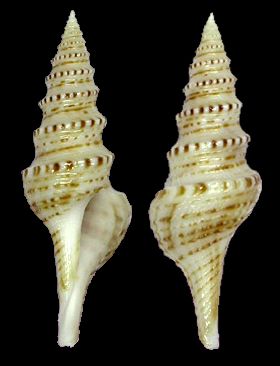
Comitas

Comitas kamakurana, copyright Korina Sangiouloglou.


Belongs within: Conoidea.

Comitas is a genus of relatively large, tall-spired conoids with a sculpture of long fold-like axials and a leaf-shaped operculum (Powell 1966).

Characters (from Powell 1966): Shell moderately large to very large, up to 95 mm, elongate-fusiform, with tall spire and moderately long, straight to slightly flexed, unnotched anterior canal. Protoconch papillate, of two smooth whorls, carinate or subcarinate over last whorl. Adult sculpture of long fold-like axials, crossed by dense spiral lirae. Suture submargined by very weak fold at most. Sinus moderately deep, rather broadly U-shaped, on shoulder slope, but nearer to periphery than to suture. Operculum leaf-shaped, with terminal nucleus. Radula of "wishbone"-type, paired marginals but with distal limb detached.

<==Comitas Finlay 1926 [incl. Carinacomitas Powell 1942] P66
    |--C. fusiformis (Hutton 1877) P66 (see below for synonymy)
    |--C. abnormis King 1933 P66
    |--C. aldingensis Powell 1944 [=C. (Carinacomitas) aldingensis] P66
    |--C. allani Powell 1942 P66
    |--C. anteridion (Watson 1881) [=Pleurotoma (Surcula) anteridion] P66
    |--C. arcana (Smith 1899) [=Pleurotoma (Surcula) arcana] P66
    |--C. bilix Marwick 1931 P66
    |--C. breviplicata (Smith 1899) [=Pleurotoma (Surcula) breviplicata] P66
    |--C. chuni (von Martens 1902) MG-H11 [=Pleurotoma (Pseudomata) chuni P66]
    |--C. clarae (Tenison-Woods 1880) [=Pleurotoma clarae, *Carinacomitas clarae] P66
    |--C. crenularoides (Pritchard 1896) [=Drillia crenularoides] P66
    |--C. declivis Powell 1931 P66
    |--C. eurina (Smith 1899) [=Pleurotoma (Surcula) eurina] P66
    |--C. galatheae Powell 1969 MG-H11
    |--C. habei Shuto 1961 [=C. (Fusiturricula) habei] P66
    |--C. hillegondae (Martin 1931) [=Pleurotoma hillegondae] P66
    |--C. ilariae Bozzetti 1991 BC01
    |--C. imperfecta King 1933 P66
    |--C. kaderlyi (Lischke 1872) [=Pleurotoma kaderlyi] P66
    |--C. kaipara Laws 1939 P66
    |--C. kamakurana (Pilsbry 1895) P66 (see below for synonymy)
    |--C. kayalensis (Dey 1962) [=Turricula kayalensis] P66
    |--C. kuroharai (Oyama 1962) [=Turricula kuroharai] P66
    |--C. latescens (Hutton 1873) [=Pleurotoma latescens] P66
    |--C. latiaxialis (Marshall 1918) [=Surcula latiaxialis] P66
    |--C. lurida (Adams & Reeve 1850) [=Pleurotoma lurida] P66
    |--C. margaritae (Smith 1904) [=Pleurotoma (Surcula) margaritae] P66
    |--C. melvilli (Schepman 1913) [=Surcula melvilli] P66
    |--C. miyazakiensis Shuto 1961 [=C. (Fusiturricula) miyazakiensis] P66
    |--C. murrawolga (Garrard 1961) [=Turricula murrawolga] P66
    |--C. onokeana King 1933 P66
    |    |--C. o. onokeana P66
    |    `--C. o. vivens Dell 1956 P66
    |--C. pagodaeformis (Schepman 1913) [=Drillia pagodaeformis] P66
    |--C. pseudoclarae Powell 1944 P66
    |--C. saldanhae (Barnard 1958) [=Turris saldanhae] P66
    |--C. salebrosa (Harris 1897) [=Pleurotoma salebrosa] P66
    |--C. sibogae (Schepman 1913) [=Spergo sibogae] P66
    |--C. sobrina (Yokoyama 1923) [=Drillia sobrina] P66
    |--C. solitaria (King 1933) [=Insolentia solitaria] P66
    |--C. stolida (Hinds 1843) [=Pleurotoma stolida] P66
    |--C. subcarinapex Powell 1942 [=C. (Carinacomitas) subcarinapex] P66
    |--C. subsuturalis (Martens 1902) P66
    |--C. symbiotes (Wood-Mason & Alcock 1891) [=Pleurotoma symbiotes] P66
    |    |--C. s. symbiotes P66
    |    `--C. s. subcorpulenta (Smith 1894) [=Pleurotoma (Surcula) subcorpulenta] P66
    |--C. terrisae Vella 1954 P66
    |--C. thisbe (Smith 1906) [=Pleurotoma (Surcula) thisbe] P66
    |--C. torquayensis Powell 1944 P66
    |--C. trailli (Hutton 1873) [=Pleurotoma trailli; incl. Surcula verrucosa Suter 1899] P66
    `--C. wynyardensis (Pritchard 1896) [=Pleurotoma wynyardensis] P66

Comitas fusiformis (Hutton 1877) P66 [=Drillia fusiformis P66; incl. Surcula huttoni Suter 1914 P66, Surcula oamarutica Suter 1917 P66, *Comitas oamarutica P66, Turricula oamarutica F27]

Comitas kamakurana (Pilsbry 1895) P66 [=Pleurotoma kamakurana P66; incl. Turricula (Surcula) laysanica Dall 1919 P66, D19]

*Type species of generic name indicated

REFERENCES

[BC01] Boyko, C. B., & J. R. Cordeiro. 2001. Catalog of Recent type specimens in the Division of Invertebrate Zoology, American Museum of Natural History. V. Mollusca, part 2 (class Gastropoda [exclusive of Opisthobranchia and Pulmonata], with supplements to Gastropoda [Opisthobranchia], and Bivalvia). Bulletin of the American Museum of Natural History 262: 1–170.

[D19] Dall, W. H. 1919. Descriptions of new species of mollusks of the family Turritidae from the west coast of America and adjacent regions. Proceedings of the United States National Museum 56 (2288): 1–86, pls 1–24.

[F27] Finlay, H. J. 1927. New specific names for austral Mollusca. Transactions and Proceedings of the New Zealand Institute 57: 488–533.

[MG-H11] McEnnulty, F. R., K. L. Gowlett-Holmes, A. Williams, F. Althaus, J. Fromont, G. C. B. Poore, T. D. O’Hara, L. Marsh, P. Kott, S. Slack-Smith, P. Alderslade & M. V. Kitahara. 2011. The deepwater megabenthic invertebrates on the western continental margin of Australia (100–1100 m depths): composition, distribution and novelty. Records of the Western Australian Museum Supplement 80: 1–191.

[P66] Powell, A. W. B. 1966. The molluscan families Speightiidae and Turridae: an evaluation of the valid taxa, both Recent and fossil, with lists of characteristic species. Bulletin of the Auckland Institute and Museum 5: 1–184, pls 1–23.

Unedogemmula

Unedogemmula unedo, copyright Eng's Auctions.


Belongs within: Conoidea.

Unedogemmula is a group of relatively large conoids found in warm waters of the Indo-west Pacific (Powell 1966).

Characters (from Powell 1966): Shell large, 30–105 mm, fusiform, with tall spire and long straight unnotched anterior canal. Protoconch multispiral, narrowly conic, typically smooth of 3–3.5 whorls, terminating in half-whorl of brephic axials, varying to two whorls smooth followed by two axially costate. Sinus peripheral, a deep and narrow slit at the termination of a sinus rib formed of two, sometimes three, sharply raised cords. Coloration plain olive-brown, or with irregularly disposed reddish-brown dots on pale ground to larger maculations and axial streaks. Operculum leaf-shaped with terminal nucleus. Radula of modified wishbone-type, consisting of pair of stout hollow-based conical marginals tapering to sharp point.

<==Unedogemmula MacNeil 1961 BK11
    |--*U. unedo (Kiener 1839) P66, MG-H11 (see below for synonymy)
    |--U. bemmeleni (Oostingh 1941) [=Turris (Gemmula) bemmeleni] P66
    |--U. deshayesii (Doumet 1839) [=Pleurotoma deshayesii, Gemmula (Unedogemmula) deshayesii] P66
    |--U. hastula (Reeve 1843) (see below for synonymy) P66
    |--U. haydeni (Vredenburg 1925) [=Pleurotoma haydeni, Gemmula (Unedogemmula) haydeni] P66
    |--U. ickei (Martin 1906) [=Pleurotoma ickei, Gemmula (Unedogemmula) ickei] P66
    |--U. ina MacNeil 1960 [=Gemmula (Unedogemmula) ina] P66
    |--U. indica (Deshayes 1832) [=Pleurotoma indica, Gemmula (Unedogemmula) indica] P66
    |--U. koolhoveni (Oostingh 1938) [=Turris (Gemmula) koolhoveni] P66
    `--U. sondeiana (Martin 1895) [=Pleurotoma sondeina, Gemmula (Unedogemmula) sondeiana] P66

Unedogemmula hastula (Reeve 1843) [=Pleurotoma hastula, Gemmula (Unedogemmula) hastula; incl. P. trypanodes Melvill 1904] P66

*Unedogemmula unedo (Kiener 1839) P66, MG-H11 [=Pleurotoma unedo P66, Gemmula (*Unedogemmula) unedo P66; incl. Turris binda Garrard 1961 P66]

*Type species of generic name indicated

REFERENCES

[BK11] Bouchet, P., Y. I. Kantor, A. Sysoev & N. Puillandre. 2011. A new operational classification of the Conoidea (Gastropoda). Journal of Molluscan Studies 77: 273–308.

[MG-H11] McEnnulty, F. R., K. L. Gowlett-Holmes, A. Williams, F. Althaus, J. Fromont, G. C. B. Poore, T. D. O’Hara, L. Marsh, P. Kott, S. Slack-Smith, P. Alderslade & M. V. Kitahara. 2011. The deepwater megabenthic invertebrates on the western continental margin of Australia (100–1100 m depths): composition, distribution and novelty. Records of the Western Australian Museum Supplement 80: 1–191.

[P66] Powell, A. W. B. 1966. The molluscan families Speightiidae and Turridae: an evaluation of the valid taxa, both Recent and fossil, with lists of characteristic species. Bulletin of the Auckland Institute and Museum 5: 1–184, pls 1–23.